Technology · Products
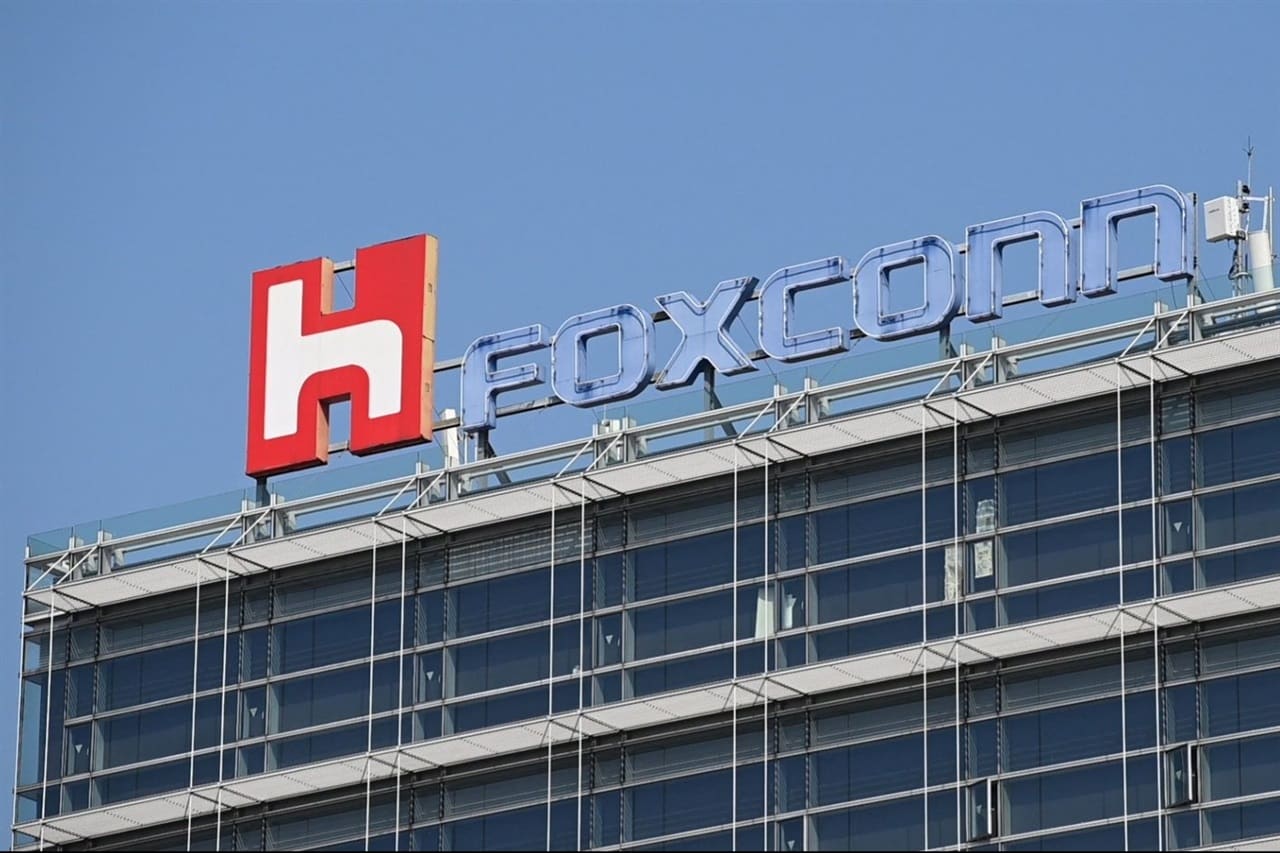
Foxconn Subsidiary Registers EV Charging Business in Vietnam
The Taiwanese contract manufacturer's Vietnamese arm has formally added electric vehicle infrastructure to its business scope, signaling deeper ambitions in Southeast Asia's mobility transition.
KEY TAKEAWAYS
- ·Fulian Precision Technology Component registered EV charging equipment as a business line on July 16, following a capital increase.
- ·The registration marks Foxconn's first formal entry into electric vehicle infrastructure in Vietnam, a market gaining momentum from VinFast and government incentives.
- ·Foxconn's move positions the contract manufacturer to serve both domestic and regional EV infrastructure demand across Southeast Asia.
A Pivot Into Infrastructure
Fulian Precision Technology Component, the Vietnamese arm of Taiwan's Foxconn Industrial Internet, has registered electric vehicle charging equipment as part of its official business scope. The update, filed on July 16, represents the first time the Taiwanese contract manufacturing giant has formally moved into EV infrastructure within Vietnam. The registration follows a recent capital injection into the subsidiary, underscoring Foxconn's willingness to back the pivot with balance-sheet commitment.
The move positions Foxconn closer to the heart of Southeast Asia's nascent electric mobility supply chain. Vietnam has emerged as a focal point for EV ambitions in the region, driven in large part by VinFast, the domestic automaker that has poured billions into both vehicle production and charging networks. For a contract manufacturer historically focused on consumer electronics and IT hardware, the charging-equipment registration signals a strategic tilt toward infrastructure that sits outside Foxconn's traditional wheelhouse.
Why Vietnam, Why Now
Vietnam's EV market remains small in absolute terms, but momentum is building. VinFast has committed to expanding its domestic charging network as part of its broader push into international markets, including the United States. Local governments have begun offering incentives for EV adoption, and the Ministry of Industry and Trade has outlined targets to increase the share of electric two-wheelers and cars on Vietnamese roads by the end of the decade. While passenger EV penetration lags behind Thailand and Indonesia in sheer volume, Vietnam's manufacturing base and export orientation make it an attractive hub for suppliers looking to serve both domestic and regional demand.
Foxconn's presence in Vietnam is already substantial. The company operates multiple facilities producing smartphones, tablets, and other electronics for global brands. Adding EV charging equipment to the business registration suggests Foxconn sees an opportunity to leverage existing manufacturing capabilities and supply-chain relationships. Charging hardware shares some overlap with power electronics and thermal management, areas where Foxconn has decades of experience in high-volume production. The capital increase that preceded the registration indicates the company is preparing to allocate resources, whether for tooling, partnerships, or pilot production lines.
The timing also aligns with broader trends in Asia's EV ecosystem. Chinese manufacturers have flooded Southeast Asian markets with affordable electric vehicles, and charging infrastructure has become a bottleneck. Governments in Thailand, Indonesia, and Vietnam have all announced public tenders and incentive schemes to accelerate charger deployment. For a contract manufacturer, this represents a chance to capture margin in a category that is still consolidating, before dominant global standards and entrenched suppliers lock in market share.
Foxconn's Wider EV Play
The Vietnamese registration is not Foxconn's first foray into electric mobility. The parent company has invested heavily in EV platforms through its MIH Consortium, an open alliance that includes automakers, technology firms, and component suppliers. Foxconn has announced partnerships to assemble electric vehicles in Thailand and has signed memoranda of understanding with several automakers, including Fisker and Lordstown Motors in the United States. The company has also developed modular EV chassis and battery-pack designs, aiming to replicate its electronics contract-manufacturing model in the automotive sector.
Yet charging infrastructure represents a different value proposition. Unlike vehicle assembly, which requires massive capital expenditure and complex quality-control regimes, charging equipment can be produced in smaller volumes with faster iteration cycles. It also offers recurring revenue potential through software integration, network management, and maintenance contracts. For Foxconn, entering the charging space allows the company to capture a slice of the EV value chain without shouldering the full risk of vehicle production.
Vietnam's position as a manufacturing hub for both domestic consumption and export also matters. If Foxconn can establish charging-equipment production in the country, it gains a foothold to serve not only Vietnamese demand but also export to neighboring markets. Thailand's EV push, Indonesia's nickel-battery ambitions, and the Philippines' emerging interest in electric mobility all create potential demand corridors. Foxconn's existing logistics networks and trade relationships in the region would support such a strategy.
Regional Context and Competitive Pressure
Foxconn is not alone in eyeing Southeast Asia's EV infrastructure opportunity. Chinese firms including BYD, Huawei, and a host of smaller charging-equipment manufacturers have already begun selling hardware across the region. European players such as ABB and Schneider Electric have established partnerships with local utilities and real-estate developers. The charging market in Southeast Asia remains fragmented, with no single standard or dominant player, creating both opportunity and uncertainty.
Vietnam's regulatory environment adds another layer of complexity. Charging standards, grid interconnection rules, and certification requirements are still evolving. The government has signaled support for EV adoption but has yet to finalize comprehensive infrastructure guidelines. For a contract manufacturer entering the space, this means navigating a fluid policy landscape while building relationships with utilities, property developers, and automakers.
The capital increase at Fulian Precision Technology Component suggests Foxconn is prepared to commit resources over a multi-year horizon. Whether the company plans to manufacture charging hardware in-house, partner with local firms, or act as an integrator for third-party equipment remains unclear. The business registration itself does not specify production targets, customer commitments, or timelines. What it does confirm is that Foxconn has formally declared its intent, a step that often precedes pilot projects, supplier negotiations, and customer discussions.
What Comes Next
The registration of EV charging equipment as a business line is a procedural milestone, not a product launch. Foxconn will need to demonstrate manufacturing capability, secure customers, and navigate Vietnam's evolving regulatory framework. The company's track record in scaling consumer electronics production provides a template, but automotive and infrastructure markets operate under different dynamics, with longer sales cycles, stricter safety standards, and deeper integration with utilities and public agencies.
For Vietnam, Foxconn's move adds another data point to the country's ambition to become a hub for EV supply chains. Whether that ambition translates into meaningful market share will depend on policy clarity, infrastructure investment, and the willingness of global automakers to deepen their commitments in Southeast Asia. Foxconn's decision to register the business line suggests the company believes the opportunity is real, even if the path to profitability remains uncertain.
RELATED STORIES

Singapore Captures Two-Thirds of Southeast Asian EV Startup Capital
Priyanka V. Rao · 3 min

Japanese Chipmaker Plans Southeast Asia Production Expansion
Cheng Wei-Lun · 3 min

Mixue Shutters 89 Stores Across Southeast Asia Amid Profit Decline
Siti Nuraini · 3 min
Chinese Brands Capture Vietnam's $92 Million Robot Vacuum Market
Siti Nuraini · 3 min
Spot something wrong? Email editor@briefasia.com. We log every correction publicly.