Perspectives · Opinion
The Energy Crisis Threatening Asia's AI Ambitions
A $5 trillion infrastructure supercycle may not be enough to keep data centers running across the region
KEY TAKEAWAYS
- ·Data centers supporting AI workloads across Asia are driving nearly $5 trillion in energy infrastructure investment as power demand outpaces grid capacity
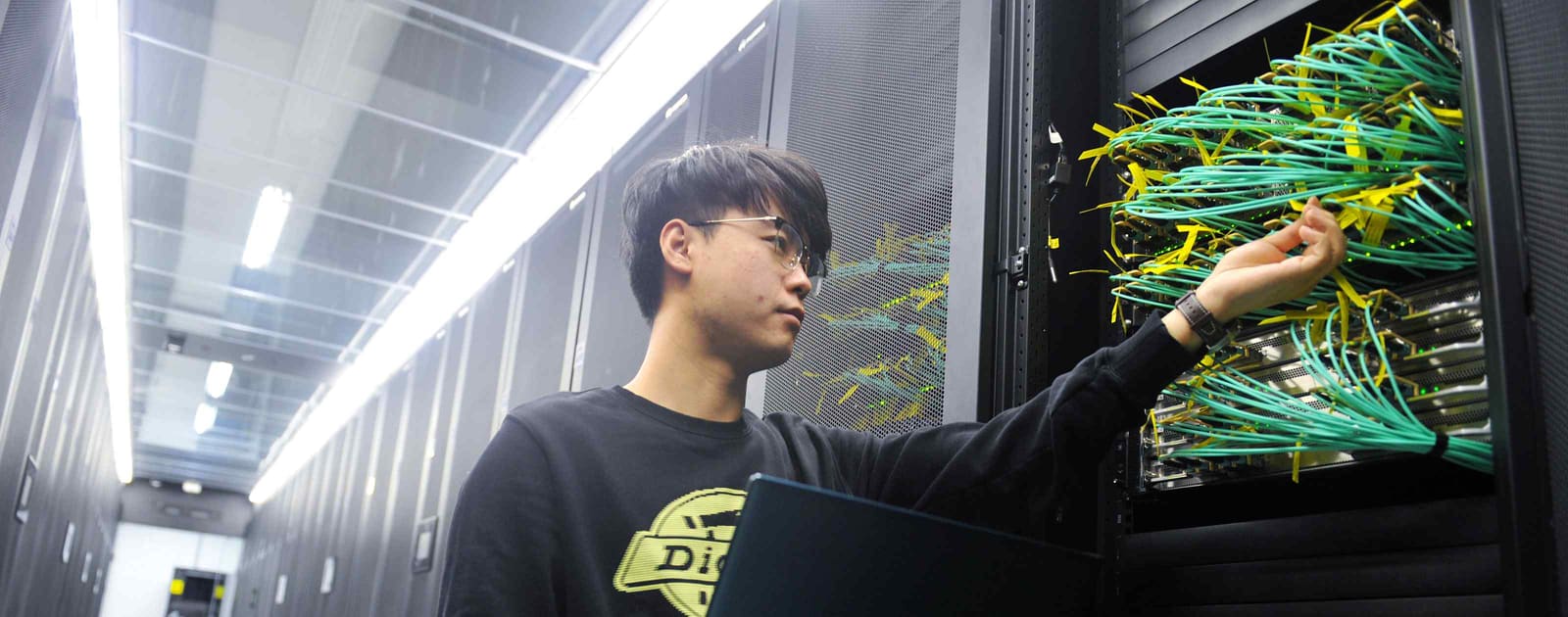
- ·Large AI training facilities consume electricity equivalent to mid-sized cities, requiring baseload power at scales that strain existing generation and transmission networks
- ·Japan and South Korea are restarting nuclear capacity while Southeast Asian markets pursue fragmented strategies ranging from coal expansion to renewable deployment
- ·Hyperscalers are shifting from power purchase agreements to direct ownership stakes in generation assets to secure reliable electricity for compute infrastructure
The Scale of the Problem
Asia's race to build artificial intelligence capacity has collided with a fundamental constraint: electricity. Across the region, from Singapore to Seoul, data centers designed to power large language models and training clusters are pushing electrical grids to their operational limits. The gap between ambition and infrastructure has never been wider.
The numbers tell the story. Energy investment across Asia tied to data center expansion is approaching $5 trillion, a figure that would have seemed implausible three years ago. Yet despite this capital commitment, power availability remains the binding constraint on AI deployment. In markets like Singapore, moratoriums on new data center construction reflect not regulatory caution but grid realities. Tokyo and Mumbai face similar pressures, where existing utility infrastructure was designed for a pre-AI world.
This is not a problem that resolves itself through incremental upgrades. A single large-scale AI training facility can consume as much electricity as a mid-sized city. The computational demands of frontier models, particularly those involving multimodal processing and real-time inference, require sustained baseload power at scales that strain generation capacity. Intermittency, even for milliseconds, can disrupt training runs that cost millions of dollars.
Why Traditional Solutions Fall Short
The conventional playbook for infrastructure bottlenecks involves accelerating construction timelines and deploying capital. That approach is necessary but insufficient here. Power generation, transmission, and distribution networks operate on development cycles measured in years, not quarters. Permitting alone for a new generation facility in major Asian markets can span 24 to 36 months. Add construction time, and the gap between demand and supply widens further.
Renewable energy, often positioned as the solution, introduces its own complications. Solar and wind capacity can address carbon concerns but not reliability requirements. AI workloads demand continuous uptime; battery storage at the scale required for large data centers remains prohibitively expensive and technically immature. Grid operators across Asia are wrestling with how to integrate variable renewable supply while maintaining the stability that compute infrastructure requires.
Natural gas offers a bridge, but pipeline infrastructure in much of Southeast Asia lags behind demand. Liquefied natural gas terminals provide flexibility, yet price volatility and supply chain dependencies create financial risk. Coal, still the dominant generation source in several Asian markets, faces both environmental opposition and stranded asset concerns as decarbonization commitments accelerate.
Regional Divergence in Response
Not every Asian market faces identical challenges, and responses vary considerably. Japan has moved aggressively to restart nuclear capacity, viewing it as essential to supporting both industrial decarbonization and AI infrastructure. The country's utilities are coordinating with hyperscalers to align generation investment with data center deployment timelines, a level of planning that remains rare elsewhere in the region.
South Korea is pursuing a similar path, coupling nuclear baseload with aggressive renewable deployment. The government has designated AI infrastructure as strategic, enabling expedited permitting and grid connection processes. Seoul's approach reflects an understanding that energy access will determine competitive positioning in the AI value chain.
Southeast Asia presents a more fragmented picture. Indonesia is leveraging its coal resources to support near-term data center growth, while simultaneously planning renewable capacity to meet longer-term sustainability commitments. Vietnam is expanding gas-fired generation, though pipeline constraints limit how quickly new capacity can come online. Thailand is exploring public-private partnerships to accelerate grid modernization, recognizing that its existing infrastructure cannot support the data center pipeline currently under discussion.
India represents both the largest opportunity and the most acute challenge. Demand for AI compute is surging, driven by both domestic startups and multinational deployment. Yet power reliability varies dramatically by region. Gujarat and Tamil Nadu offer relatively stable grids and have attracted data center investment; other states struggle with load shedding and aging transmission networks. The central government has prioritized grid stability, but execution remains uneven across states.
The Capital Allocation Question
The $5 trillion investment figure circulating across the region reflects not just generation capacity but the full stack: transmission upgrades, distribution network reinforcement, substation construction, and backup systems. This capital must be deployed efficiently, yet coordination across utilities, regulators, and data center operators remains weak in most markets.
Hyperscalers and cloud providers, accustomed to controlling their infrastructure destiny, are exploring direct investment in generation assets. This marks a significant shift. Microsoft, Google, and Amazon have historically relied on power purchase agreements; now they are evaluating ownership stakes in generation facilities or even developing captive plants. In Asia, where regulatory frameworks around independent power production vary widely, this creates both opportunity and friction.
Sovereign wealth funds and infrastructure investors see the power-for-AI thesis as compelling, but returns depend on regulatory clarity and offtake certainty. Long-term contracts with creditworthy counterparties are essential, yet negotiating these in markets with state-controlled utilities introduces political risk. The capital is available; the structures to deploy it remain under development.
What Happens Next
The energy constraint will shape which Asian markets emerge as AI leaders. Locations with surplus generation capacity, stable regulatory environments, and proactive grid planning will capture disproportionate investment. Those that cannot solve the power equation will watch compute capacity, and the economic value it generates, flow elsewhere.
This is not a temporary bottleneck. As models grow larger and inference demands scale with application adoption, power requirements will increase, not stabilize. The region's response over the next 24 months will determine whether Asia participates fully in the AI economy or remains constrained by infrastructure built for a different era.
The supercycle is real, but infrastructure takes time. The question is whether Asia can build fast enough to match the ambitions already baked into corporate and government AI strategies. Right now, the grid is the limiting factor, and no amount of capital changes the physics of power generation overnight.
RELATED STORIES

Why Shokz Is Moving Beyond Bone Conduction Audio
Tran Quoc Bao · 4 min
China Imposes Anti-Dumping Measures on Japanese Semiconductor Chemical Imports
Jun-ho Seo · 3 min

China's Auto Chip Race Shifts to Volume as Horizon Robotics Crosses 15 Million Units
Jun-ho Seo · 3 min
China's Chip Makers Split Three Ways Beneath the Revenue Growth
Tran Quoc Bao · 3 min
Spot something wrong? Email editor@briefasia.com. We log every correction publicly.