Finance · Markets
Dollar Strengthens Against Vietnam Dong as Oil Shock Fuels Global Inflation Fears
The greenback traded at a three-week high Friday while oil prices climbed above $100 per barrel following Houthi attacks on Saudi tankers in the Red Sea.
KEY TAKEAWAYS
- ·The U.S. dollar traded at VND26,510 at Vietcombank Friday, gaining ground as the greenback reached a three-week high against major currencies amid rising oil prices.
- ·Crude oil climbed above $100 per barrel for the first time since May after Houthi attacks on Saudi tankers in the Red Sea disrupted a critical shipping route.
- ·The State Bank of Vietnam raised its reference rate to VND25,283 while the dollar index held near 101.45, pressuring Asian currencies including the yen near a 40-year low.
Currency Markets React to Energy Disruption
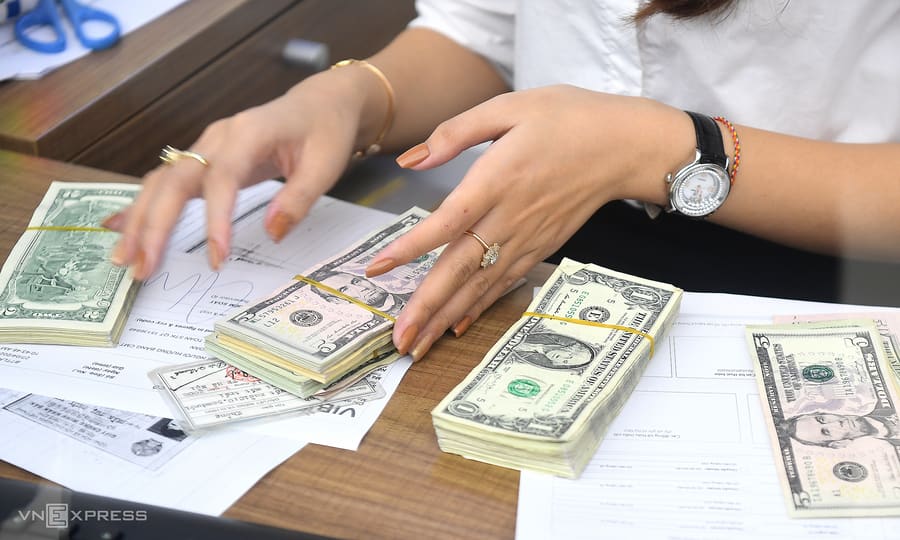
The U.S. dollar gained against the Vietnamese dong Friday morning, with commercial banks adjusting rates as the greenback climbed to a three-week high across major currency pairs. Vietcombank sold dollars at VND26,510, representing a modest uptick from the previous session, according to the State Bank of Vietnam.
The central bank raised its reference rate to VND25,283, continuing a pattern of incremental adjustments that reflect broader pressure on Asian currencies. Meanwhile, unofficial exchange markets saw the dollar trade around VND26,360, showing a slight decline in the parallel rate.
Oil Prices Drive Dollar Demand
Global currency movements Friday centered on a sharp rally in crude oil, which breached the $100-per-barrel threshold for the first time since May. The surge followed attacks by Yemen's Houthi forces on two Saudi oil tankers navigating the Red Sea, a critical artery for global energy shipments that handles roughly 12% of seaborne petroleum traffic.
The disruption marks the second major shipping chokepoint affected by Middle East conflict, after earlier strikes near the Strait of Hormuz. Energy traders responded by bidding up futures contracts, sending Brent crude up more than 4% in a single session and reigniting concerns about supply constraints that had eased earlier in the year.
Rising oil costs typically strengthen the dollar as investors seek haven assets and as the Federal Reserve faces renewed pressure to maintain elevated interest rates. U.S. Treasury yields climbed in tandem, with the 10-year note pushing higher as bond markets priced in a longer window of tight monetary policy.
Asian Currencies Under Pressure
The dollar's resurgence pressured currencies across the region. The Japanese yen hovered near 163.86 per dollar, approaching a 40-year low as the Bank of Japan maintained its ultra-loose policy stance. The New Zealand dollar edged down to $0.5776 after dropping nearly a full percentage point in the prior session.
European currencies also weakened. Sterling traded around $1.3313, near a three-week trough, while the euro wobbled at $1.1376. The dollar index, which measures the greenback against a basket of six major peers, held near 101.45.
For Vietnam, the dong's movement reflects both domestic economic conditions and external shocks. The country runs a substantial trade surplus, which typically supports its currency, but rising import costs for energy and raw materials can offset that advantage when oil prices spike. Vietnam imports the majority of its petroleum products, making the economy sensitive to fluctuations in global energy markets.
Inflation and Trade Tensions Loom
The combination of higher oil prices and renewed trade friction has rekindled inflation anxieties that policymakers in Washington and other capitals thought were receding. U.S. inflation data released earlier in the week showed core price growth holding above the Federal Reserve's 2% target, complicating the central bank's calculus on interest rate cuts that markets had anticipated for later this year.
Trade policy uncertainty adds another layer. Renewed tariff discussions between Washington and Beijing have unsettled investors who worry that supply chain disruptions could push costs higher. For Vietnam, which has benefited from companies diversifying manufacturing away from China, the trade environment remains a double-edged sword. Increased production activity supports growth, but global demand volatility and input cost swings create challenges for exporters.
Currency strategists note that the State Bank of Vietnam has room to adjust policy if the dong comes under sustained pressure. The central bank has historically intervened in foreign exchange markets to smooth volatility, drawing on reserves that stood above $100 billion earlier this year. However, officials must balance currency stability with the need to keep Vietnamese exports competitive in price-sensitive markets.
What Comes Next
Market participants will watch whether oil prices stabilize or continue climbing, which would intensify inflationary pressures and likely keep the dollar elevated. The Red Sea remains a flashpoint, with shipping companies rerouting vessels and insurance costs rising. Any further escalation in the Middle East could disrupt supplies more severely, compounding the economic impact.
For Vietnam, the near-term outlook depends partly on how quickly global energy markets adjust and whether the Federal Reserve signals a shift in its policy stance. The dong has shown relative resilience compared to some regional peers, supported by strong export performance and foreign direct investment inflows. Yet external shocks like the current oil surge test that stability, particularly if the trend persists into the second half of the year.
Currency traders in Hanoi and Ho Chi Minh City will be monitoring both domestic data releases and signals from Washington and major central banks. The interplay between energy costs, inflation expectations, and monetary policy will shape the dong's trajectory in the weeks ahead.
RELATED STORIES

Malaysia Hospital Group A1Health Prepares US$1.7 Billion IPO for Early 2027
Tran Quoc Bao · 2 min

Vietnam's VN-Index Climbs Toward 1,800 as Market Sentiment Strengthens
Priyanka V. Rao · 3 min
Vietnam's Trade Turnover Hits $770 Billion as Imports Surge Past Exports
Jun-ho Seo · 2 min

Samsung's Vietnam Operations Post 23% Profit Jump to $2.3 Billion
Tran Quoc Bao · 3 min
Spot something wrong? Email editor@briefasia.com. We log every correction publicly.