Finance · Markets
DBS Becomes Singapore's First S$200 Billion Company
The banking giant hit the milestone as local lenders rally to record highs ahead of second-quarter earnings in August
KEY TAKEAWAYS
- ·DBS became the first Singapore-listed company to exceed S$200 billion in market capitalisation on Monday, closing at S$70.79 per share.
- ·The banking sector rally is driven by a stabilising interest rate environment and investor optimism ahead of second-quarter earnings releases in early August.
- ·Analysts expect the upward momentum to continue if banks deliver positive guidance on margins, loan growth, and sustained wealth management revenue.
A New Benchmark for Singapore Equities
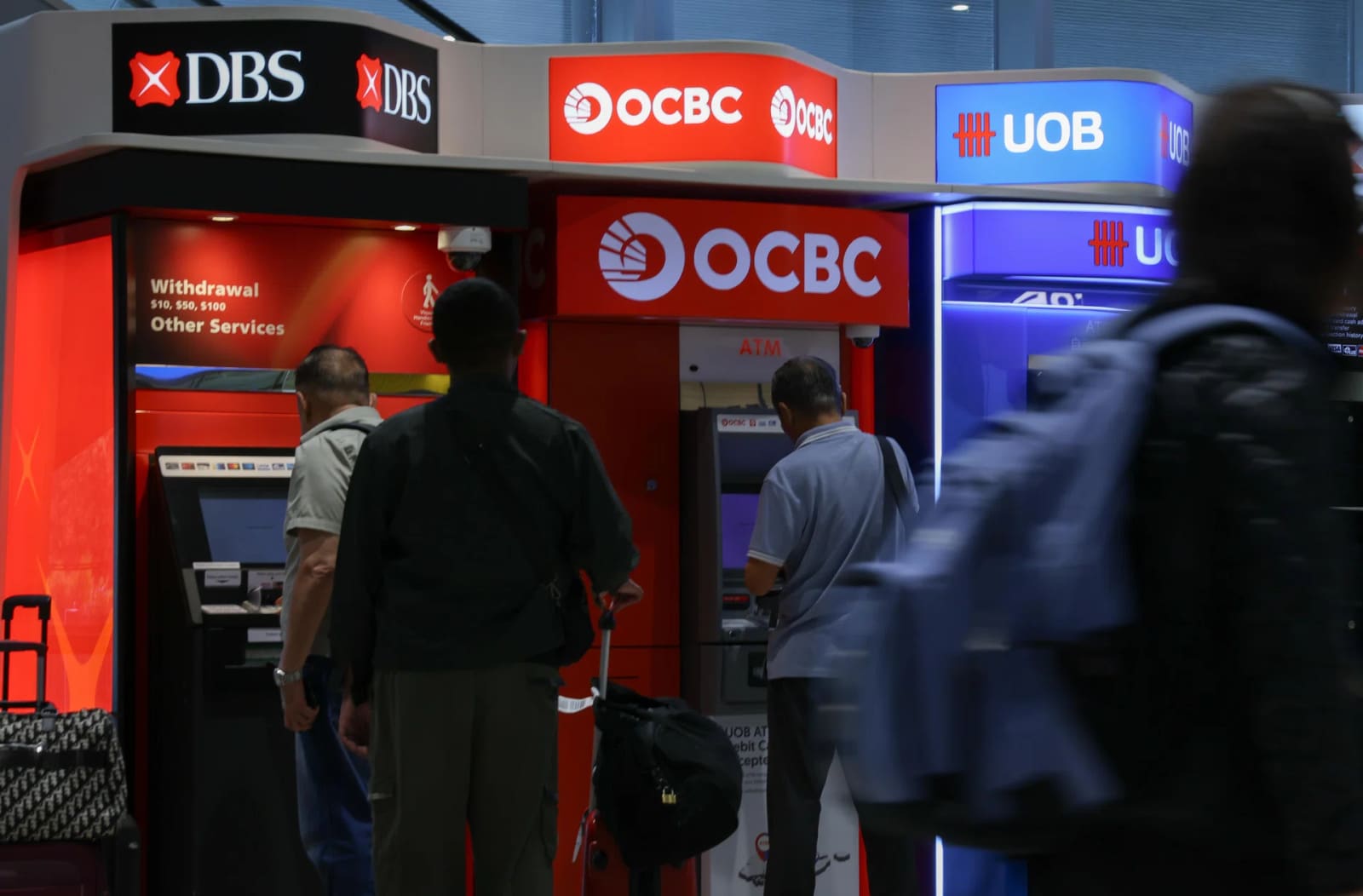
DBS breached S$200 billion in market capitalisation on Monday, becoming the first Singapore-listed company to cross that symbolic threshold. The milestone caps a week of strong gains across the city-state's three major banks, which have climbed to record levels and pulled the Straits Times Index to fresh highs.
DBS closed 0.5 percent higher at S$70.79 on Monday, while OCBC added 0.2 percent to S$27.48. UOB slipped 0.9 percent to S$43.98 but remains near its recent peak. The rally marks a sharp reversal from the cautious sentiment that weighed on financials earlier in the year, when investors fretted over margin pressure and uneven loan growth.
Rate Clarity and Earnings Momentum
The surge reflects growing confidence in the sector's earnings trajectory as the banks prepare to report second-quarter results in early August. Analysts point to two primary drivers: a stabilising interest rate environment that should support net interest margins, and expectations that fee income and wealth management revenues have remained resilient.
Singapore's banking system has benefited from the region's elevated rate structure over the past two years, with deposit repricing lagging loan yields and driving record profitability. Although some margin compression is inevitable as deposit costs catch up, the pace of that shift has been slower than many feared, leaving room for continued strong performance.
Wealth management operations have also emerged as a critical earnings engine. Singapore's position as a regional private banking hub, combined with inflows from Hong Kong and mainland China, has bolstered asset-under-management figures and fee generation. The banks have invested heavily in digital platforms and relationship managers to capture this flow, and early indications suggest those bets are paying off.
What Analysts Expect
Market observers believe the rally still has legs, particularly if management teams deliver upbeat guidance when they present results next month. Consensus estimates project mid-single-digit earnings growth for the quarter, with upside risk if credit costs remain benign and treasury income surprises to the upside.
The banks have also been disciplined capital allocators, buying back shares and maintaining dividend payout ratios above 50 percent. That combination of yield and growth has attracted both domestic institutions and foreign funds, which have rotated into Singapore financials as a defensive play amid volatility elsewhere in Asia.
Trade finance volumes have picked up as regional supply chains adjust to new tariff regimes and manufacturing shifts. Singapore's role as a trade financing centre means its banks are well-positioned to capture margin on letters of credit, guarantees, and working capital facilities tied to Southeast Asian exports.
Broader Market Implications
The banking rally has been instrumental in pushing the STI to new territory. Financials account for roughly 40 percent of the benchmark index by weight, so sustained strength in DBS, OCBC, and UOB translates directly into index gains. That dynamic has drawn passive flows from exchange-traded funds and index trackers, creating a reinforcing cycle.
The S$200 billion threshold also underscores Singapore's growing weight in regional equity markets. DBS now ranks among the largest financial institutions in Asia by market value, trailing only a handful of Chinese and Japanese megabanks. For a city-state of 5.6 million, that scale reflects both the depth of its capital markets and the franchise value built over decades of prudent regulation and regional expansion.
Investors will be watching closely when earnings season begins in August. Guidance on margin trends, loan growth in key segments like mortgages and corporate lending, and any commentary on dividend policy will set the tone for the second half. If the banks can demonstrate that profitability is sustainable even as rate tailwinds fade, the current rally may prove more than a short-term momentum play.
RELATED STORIES
Singapore Brokerages Raise STI Targets on Earnings Strength
Jun-ho Seo · 3 min
DBS Posts Record Quarterly Profit of S$3.08 Billion, Lifts Full-Year Outlook
Priyanka V. Rao · 2 min
Singapore Court Awards UOB S$76 Million in Marina Collection Fraud Case
Priyanka V. Rao · 3 min

Addvalue Technologies Lands $5 Million in Space and Radio Contracts
Tran Quoc Bao · 3 min
Spot something wrong? Email editor@briefasia.com. We log every correction publicly.