Finance · Banking
DayOne Lands $530 Million Green Loan for Singapore's First Hydrogen-Ready Data Centre
Three Singapore banks back 20-megawatt facility testing solid oxide fuel cell technology amid AI-driven infrastructure demand
KEY TAKEAWAYS
- ·DayOne secured a four-year S$530 million green loan from DBS, OCBC, and UOB to build a 20-megawatt data centre in western Singapore featuring solid oxide fuel cell technology.
- ·The facility, scheduled for Q1 2027 operations, will be Singapore's first commercial data centre testing on-site hydrogen-based power generation alongside vertical solar panels and hybrid cooling.
- ·The project received BCA Green Mark Platinum certification and reflects rising demand for energy-efficient infrastructure as AI workloads drive regional power consumption sharply higher.
Singapore Banks Finance Hydrogen Experiment
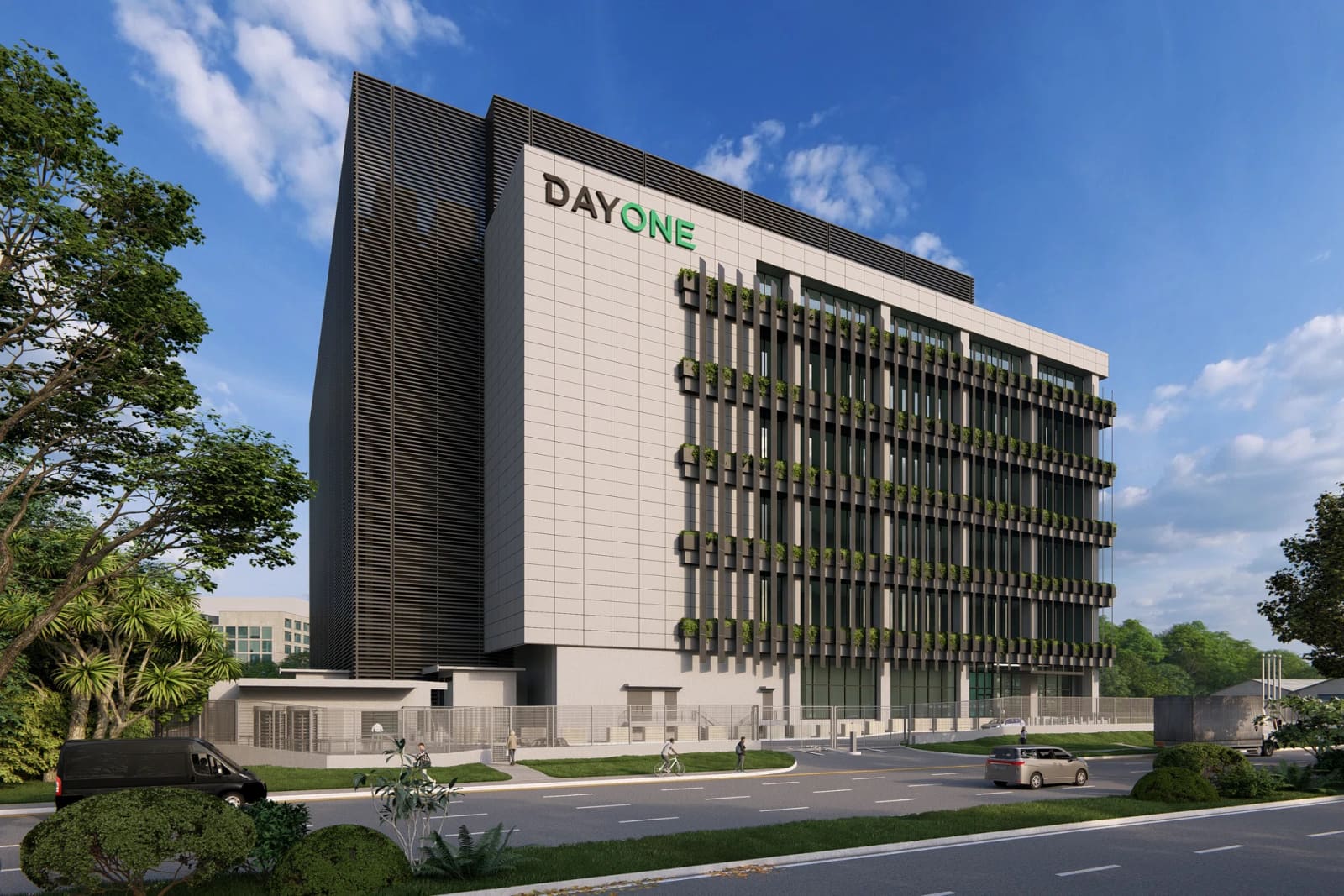
Global infrastructure operator DayOne has closed a four-year S$530 million green loan facility with DBS, OCBC, and UOB to construct a data centre in western Singapore that will test solid oxide fuel cell technology, according to DayOne. The 20-megawatt facility represents the city-state's first attempt at deploying hydrogen-based power generation within a commercial data centre environment.
Construction began in July 2025, with operations scheduled to commence in the first quarter of 2027. The three banks are acting as joint mandated lead arrangers, bookrunners, and green loan coordinators, with DBS additionally serving as facility and security agent.
The financing arrives as data centre power consumption across Asia climbs sharply. Generative AI workloads and high-performance computing clusters require substantially more electricity per rack than traditional cloud infrastructure, forcing operators to explore alternative energy pathways beyond grid supply and conventional backup generators.
Testing Fuel Cell Viability at Scale
The DayOne facility will incorporate on-site solid oxide fuel cells as a proof-of-concept for hydrogen energy in mission-critical digital infrastructure. Solid oxide systems convert hydrogen or natural gas into electricity through electrochemical reactions at high temperatures, offering higher efficiency than combustion-based generators and zero direct carbon emissions when fueled by green hydrogen.
Singapore has limited renewable energy resources. Solar capacity is constrained by land scarcity and equatorial cloud cover, making the island nation heavily reliant on natural gas imports for baseload power. The government has identified hydrogen as a potential long-term energy vector, but commercial deployment remains in early stages due to supply chain gaps and cost barriers.
Beyond the fuel cell experiment, the facility will integrate vertical building-integrated photovoltaics and hybrid air-liquid cooling systems designed to improve power usage effectiveness. In December 2025, the project received BCA Green Mark Platinum (Provisional) certification, the highest tier under the Building and Construction Authority's sustainability framework for data centres.
Regional Infrastructure Stakes
Han Kwee Juan, group head of institutional banking at DBS, noted that accelerating AI and cloud adoption is driving energy consumption higher across the region. "Singapore is well-positioned to lead financing of green and energy-efficient digital infrastructure in Asia," Han said.
Elaine Lam, head of global corporate banking at OCBC, described the project as an important milestone in sustainable infrastructure evolution. Edmund Leong, head of group corporate banking at UOB, emphasized that digital infrastructure is increasingly a strategic asset underpinning economic competitiveness and resilience.
The deal reflects growing appetite among Asian lenders to back data centre projects that meet green financing criteria. Sustainability-linked loans and green bonds have become standard tools for operators seeking to demonstrate environmental credentials to regulators and enterprise customers, particularly in jurisdictions like Singapore where government data centre moratoriums have been lifted only for facilities meeting stringent efficiency and renewable energy thresholds.
Hydrogen Economics Still Unproven
While the DayOne facility advances Singapore's hydrogen ambitions, significant questions remain around commercial viability. Green hydrogen production costs remain multiples higher than grid electricity in most Asian markets, and local supply infrastructure is nascent. Most solid oxide fuel cell deployments to date have been pilot-scale or backup power applications rather than primary generation for continuous loads.
The four-year loan tenor aligns with the facility's construction and early operational phase, giving lenders and the operator a window to assess fuel cell performance, maintenance costs, and hydrogen procurement economics before committing to longer-term financing or replication across other sites.
DayOne operates data centres across Asia-Pacific and Europe. The Singapore project marks the company's first entry into a market historically dominated by established players such as Equinix, Digital Realty, and ST Telemedia's STT GDC. Abu Dhabi sovereign wealth vehicle MGX was reported in late 2025 to be exploring a multibillion-dollar investment in DayOne, though no formal transaction has been announced.
Singapore lifted its three-year data centre moratorium in 2022, allowing new capacity only for facilities demonstrating best-in-class energy efficiency and commitments to renewable energy use. The hydrogen fuel cell component positions the DayOne facility as a test case for whether alternative energy technologies can satisfy both regulatory requirements and the uptime demands of hyperscale cloud tenants.
RELATED STORIES

Singapore's Private Banks Miss One-Month Onboarding Target as Complex Checks Drag On
Priyanka V. Rao · 3 min
GXS Bank Launches Credit Card with 10% Grab Rebates
Priyanka V. Rao · 3 min
Singapore Retail Investors Turn to AI Assistants for Portfolio Decisions
Priyanka V. Rao · 3 min
Investment Banks Brace for Talent Drain as Hong Kong Prepares Fund Manager Tax Cuts
Priyanka V. Rao · 4 min
Spot something wrong? Email editor@briefasia.com. We log every correction publicly.