Technology · Dev
Chinese PCB Makers Accelerate Investment in AI Server and High-End Computing Markets
Mainland manufacturers are committing billions to high-performance computing, optical communications, and advanced substrates as they challenge South Korean dominance in premium circuit board segments.
KEY TAKEAWAYS
- ·Chinese PCB manufacturers are committing large-scale capital to production lines for AI servers, high-performance computing, and optical communications infrastructure.
- ·The investment mirrors earlier capacity expansions in semiconductors and displays, targeting premium segments historically dominated by South Korean suppliers.
- ·Emerging Chinese capacity may reshape regional supply dynamics and provide procurement flexibility for data center operators across Asia-Pacific markets.
Capacity Race in Premium Circuit Boards
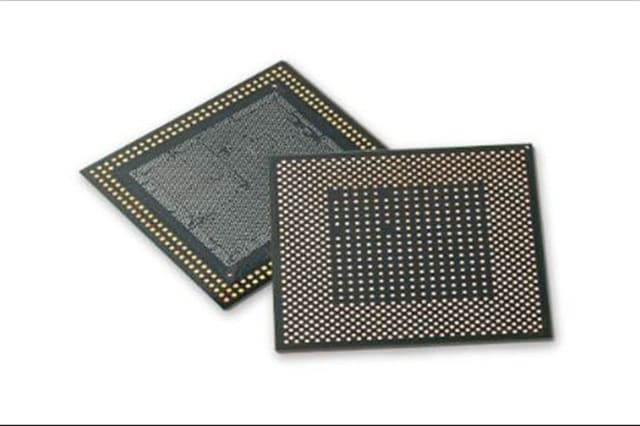
Printed circuit board manufacturers in mainland China are deploying significant capital into advanced manufacturing lines targeting artificial intelligence servers, high-performance computing platforms, and optical communications infrastructure. The expansion represents a strategic pivot toward higher-margin product categories that have traditionally been dominated by South Korean suppliers.
The investment wave follows a well-established playbook. Over the past decade, Chinese companies successfully scaled capacity in semiconductor packaging and flat-panel displays, often moving from commodity segments into more sophisticated applications through sustained capital deployment and technology partnerships. The PCB sector now appears to be following the same trajectory.
Technology Gap and Catch-Up Strategy
South Korean firms established early leadership in high-end PCB substrates, the multi-layer circuit boards that underpin AI accelerators and data center servers. These products demand tighter tolerances, more complex layer structures, and advanced materials compared to standard consumer electronics boards. The technical barriers have historically kept entry costs high and limited the number of qualified suppliers.
Chinese manufacturers are now investing in production lines capable of meeting these specifications. The focus on AI servers is particularly strategic given the explosive growth in generative AI infrastructure and the corresponding demand for high-density interconnect boards that can handle increased power delivery and signal integrity requirements.
Optical Communications as Adjacent Growth Market
Alongside computing applications, Chinese PCB makers are targeting optical communications infrastructure. This segment includes circuit boards for data center switches, optical transceivers, and telecommunications equipment where signal speed and electromagnetic compatibility are critical. The optical communications market has grown in parallel with hyperscale data center buildouts across Asia, creating sustained demand for specialized PCB products.
The dual focus on computing and optical applications suggests manufacturers are positioning themselves across the entire data infrastructure supply chain, from server motherboards to network switching hardware. This integrated approach mirrors strategies employed by established Asian electronics suppliers that serve multiple adjacent markets with overlapping technical requirements.
Regional Implications for Supply Chains
The capacity additions in China are likely to reshape regional PCB supply dynamics. South Korean suppliers have historically commanded premium pricing due to their technology lead and established customer relationships with major server OEMs. As Chinese manufacturers achieve technical parity in high-layer-count boards and advanced substrates, pricing pressure may intensify in segments that were previously insulated from commodity competition.
For systems integrators and data center operators across Asia, the emergence of additional qualified suppliers could provide procurement flexibility and potentially reduce lead times for custom board designs. However, qualification cycles for mission-critical server applications can extend over multiple quarters, meaning any supply chain shifts will unfold gradually rather than immediately.
Investment Scale and Industry Consolidation
While specific investment figures have not been disclosed by individual companies, the scale of capacity expansion is consistent with patterns observed during China's previous semiconductor and display panel buildouts. Those episodes involved tens of billions of dollars in aggregate capital expenditure, often supported by regional government incentives and access to low-cost financing.
The current PCB investment cycle may also accelerate industry consolidation. Smaller manufacturers without access to capital for advanced production lines may find themselves squeezed between commodity pricing in legacy products and the technical requirements of premium markets. Larger players with stronger balance sheets are better positioned to absorb the upfront costs of transitioning to high-end substrates.
Technology Transfer and Talent Acquisition
Success in advanced PCB manufacturing depends not only on equipment but also on process know-how and design expertise. Chinese companies have historically recruited experienced engineers from Taiwan, South Korea, and Japan to accelerate technology transfer. This talent acquisition strategy has proven effective in narrowing capability gaps in other electronics sectors and is likely being employed again in the PCB space.
Design partnerships with server OEMs and AI chip designers will also be critical. High-performance computing boards require close collaboration between silicon designers and PCB engineers to optimize signal routing, power distribution, and thermal management. Chinese manufacturers that can demonstrate design competence alongside manufacturing capacity will have an advantage in winning new program awards.
Market Outlook and Competitive Dynamics
The timing of the investment push aligns with sustained growth forecasts for AI infrastructure spending across Asia-Pacific. Cloud providers and telecommunications operators in the region are expanding data center footprints, driving demand for both computing and networking hardware. This demand backdrop provides a favorable environment for new capacity to be absorbed without immediately destabilizing market pricing.
However, the competitive landscape remains fluid. South Korean suppliers are not standing still; they continue to invest in next-generation substrates for advanced packaging and chiplet architectures. The race is less about displacing incumbents entirely and more about capturing incremental growth in a rapidly expanding market. Chinese manufacturers that can deliver comparable quality at competitive pricing will find opportunities, particularly with domestic customers and regional systems integrators seeking supply chain diversification.
RELATED STORIES

DeepSeek Launches Open-Source Agent Platform to Challenge Anthropic's Claude Cowork
Cheng Wei-Lun · 3 min
Alibaba Cloud Opens First Commercial Zhenwu M890 Supernode in Inner Mongolia
Cheng Wei-Lun · 3 min

DeepSeek Splits API Pricing Into Peak and Off-Peak Tiers
Cheng Wei-Lun · 3 min

India's Battery Materials Industry Outpaces Stalled Cell Production
Priyanka V. Rao · 3 min
Spot something wrong? Email editor@briefasia.com. We log every correction publicly.