Technology · AI
Chinese Dexterous Hand Makers Emerge as Focus Shifts in Humanoid Robotics
World Robot Conference 2026 signals pivot from locomotion to manipulation as three competing technology approaches battle for dominance in end-effector design
KEY TAKEAWAYS
- ·World Robot Conference 2026 in Beijing highlighted a strategic shift in China's humanoid robotics sector from walking capabilities to advanced dexterous hand technology.
- ·Three competing technical approaches have emerged: tendon-driven systems, direct-drive motor architectures, and hybrid pneumatic-electronic models, each optimized for different industrial use cases.
- ·Localized supply chains in Shenzhen and Suzhou, combined with municipal pilot programs, are giving Chinese manufacturers speed and cost advantages in scaling end-effector production.
A New Competitive Arena
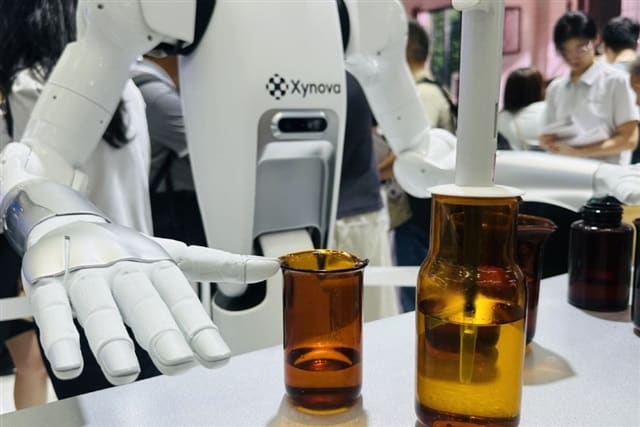
China's humanoid robotics landscape is undergoing a strategic reorientation. At the World Robot Conference 2026 in Beijing, industry attention has migrated from bipedal locomotion to the precision and versatility of robotic hands. The shift represents a maturation of the sector, where manufacturers now compete on the sophistication of end-effectors rather than the ability to walk.
The change in emphasis reflects broader industry recognition that commercial utility depends less on mimicking human gait and more on replicating the dexterity required for manufacturing, logistics, and service tasks. As locomotion technology has become commoditized across Chinese robotics firms, differentiation now hinges on manipulation capabilities.
Three Technical Philosophies
Chinese manufacturers are pursuing three distinct approaches to dexterous hand design, each with different trade-offs in complexity, cost, and performance. The first path prioritizes tendon-driven systems that replicate biological hand mechanics through cable networks. These designs offer fluid, natural motion but require intricate assembly and ongoing maintenance.
A second cohort favors direct-drive motor architectures, placing actuators within each finger joint. This approach delivers precise control and simplified mechanical design, though at the cost of added weight and power consumption. The configuration appeals to applications where force and repeatability matter more than anthropomorphic appearance.
The third path explores hybrid models that blend pneumatic actuation with electronic control. These systems promise compliance and safety in human-adjacent environments, yet face challenges in response time and the need for compressed air infrastructure.
Market Dynamics and Regional Context
The concentration of Chinese firms in the dexterous hand segment has implications for regional supply chains. Component makers in Shenzhen and Suzhou are ramping production of miniature actuators, force sensors, and flexible circuit boards tailored to hand assemblies. This localized ecosystem gives Chinese integrators speed and cost advantages, enabling rapid iteration cycles that overseas competitors struggle to match.
Regional government incentives have accelerated development. Municipal funding in Beijing, Shanghai, and Hangzhou supports pilot deployments in warehouses and assembly lines, creating real-world test beds for dexterous hand technology. These programs lower the barrier to commercial adoption and generate performance data that feeds back into design refinement.
Industrial Implications
The emphasis on end-effectors aligns with China's push to automate labor-intensive industries. Garment factories, electronics assembly plants, and logistics hubs represent immediate markets for robots capable of grasping irregular objects, manipulating small components, and adapting to variable tasks. Walking robots may capture headlines, but dexterous hands unlock revenue.
International robotics firms are monitoring the shift closely. Japanese and South Korean manufacturers, traditionally strong in industrial automation, face new competition in a segment where software integration and sensor fusion matter as much as mechanical precision. The race to define standards for gripper interfaces and control protocols is intensifying.
What Comes Next
As Chinese dexterous hand makers scale production, the next battleground will likely center on software ecosystems. Hardware differentiation narrows as manufacturing techniques spread; the ability to train hands on diverse tasks through machine learning and teleoperation will separate leaders from followers.
The World Robot Conference 2026 has made clear that humanoid robotics is no longer a moonshot project focused on replicating human form. It is an industrial technology race where practical manipulation capabilities determine market position. Chinese firms, by concentrating resources on end-effectors, are betting that hands matter more than feet in the race to commercialize humanoid platforms.
RELATED STORIES
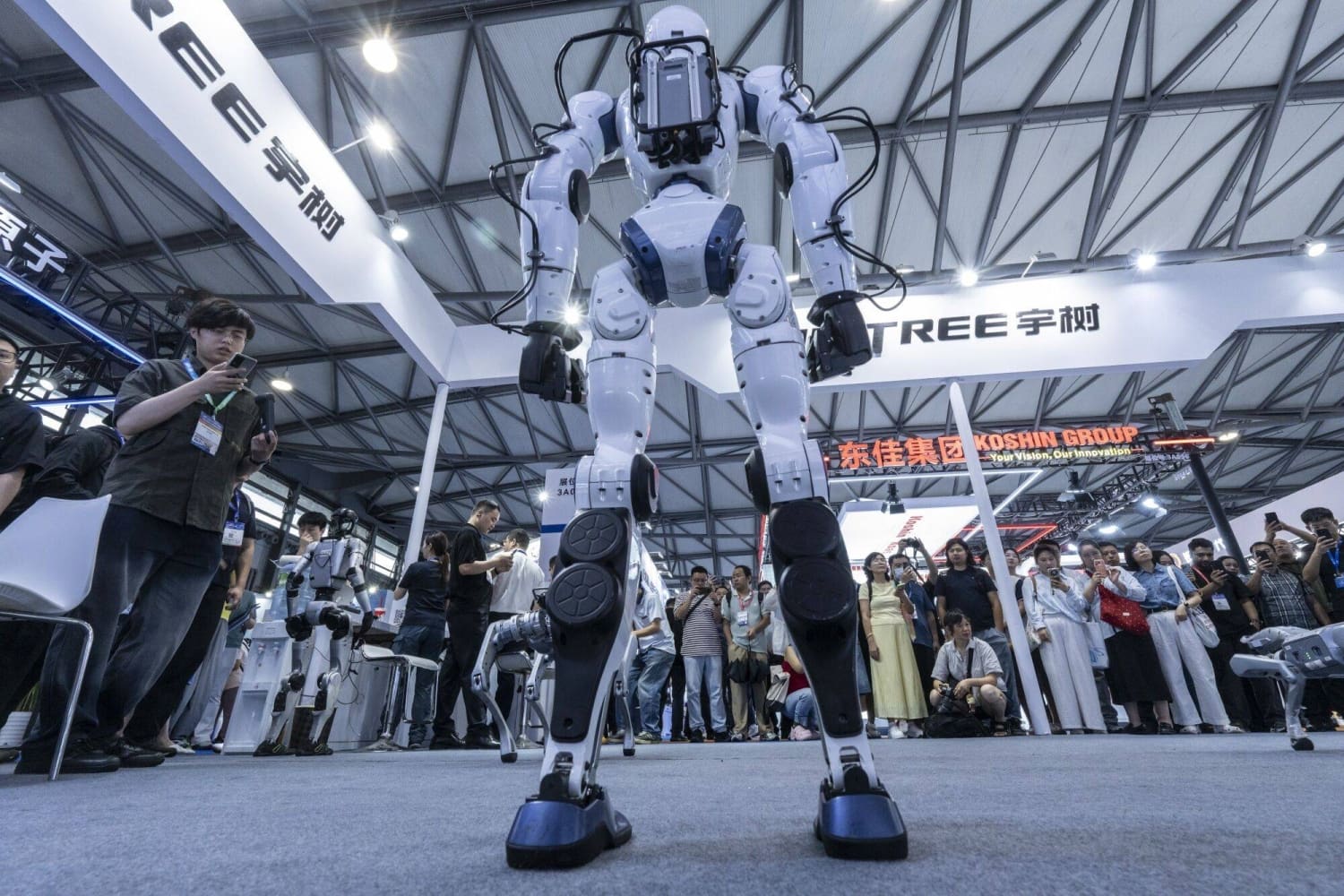
Unitree Robotics Shows R1 Humanoid at Shanghai Industry Exhibition
Cheng Wei-Lun · 2 min

China Pushes Data Centers Into Rural Provinces to Meet AI Demand
Cheng Wei-Lun · 3 min

Kuaishou Bets on Lord of Mysteries Game to Break Into Competitive Gaming Market
Cheng Wei-Lun · 3 min

Eight Chinese Automakers Launch Electric Models in Single Day
Cheng Wei-Lun · 3 min
Spot something wrong? Email editor@briefasia.com. We log every correction publicly.