Perspectives · Opinion
When a Terrible Cartoon Becomes China's Best Stock Market Commentary
Retail investors are finding dark humor in a crude animation about a newborn calf that mirrors their own brutal experience in a market of false rallies and empty promises.
KEY TAKEAWAYS
- ·A low-budget animated film earned 25 million yuan after going viral as a metaphor for China's volatile stock market and retail investor losses.
- ·Bullish technical patterns in Chinese equities have preceded negative 20-day returns 55 percent of the time over the past decade, undermining retail reliance on chart analysis.
- ·The film's characters symbolize market dynamics: a shape-shifting cobra represents unreliable technical signals, a brave leopard embodies failed rallies, and wolves reflect structural asymmetries.
- ·China's retail-dominated market structure creates feedback loops where individual investors chase momentum, institutions sell into rallies, and cycles repeat with retail traders absorbing losses.
- ·The viral success of the crude animation reflects deeper frustration with a market shaped by policy interventions and informational asymmetries that favor institutions over individuals.
The Unlikely Box Office Phenomenon
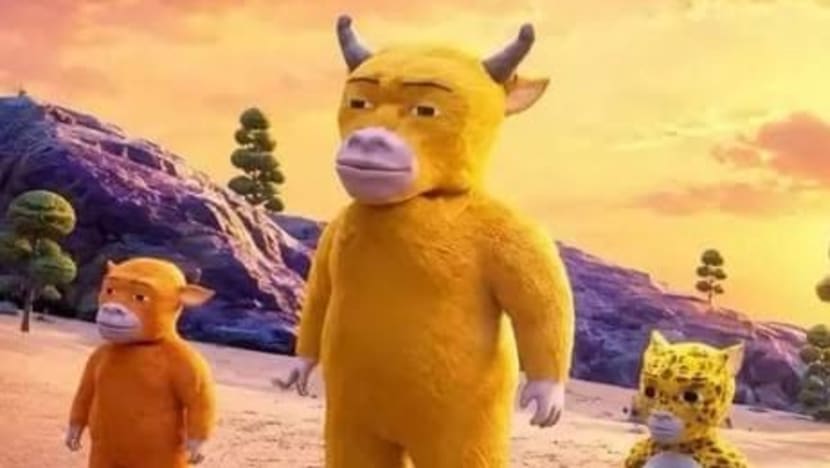
An 86-minute animation about a newborn calf stumbling through an abstract dream has become the summer's most unexpected box office success in China. The film earned just 7,700 yuan in its first ten days. Within weeks, it had crossed 25 million yuan, propelled not by critical acclaim but by a wave of online mockery that transformed it into something more valuable: a perfect metaphor for China's stock market.
The animation is objectively poor. Its hand-drawn aesthetic feels decades out of step in an era when AI can generate photorealistic imagery in seconds. Yet retail investors, freshly bruised from July's momentum-stock collapse, found themselves in the story of Niu Lai, a calf who encounters a cobra, befriends a leopard named Bao La, and watches his mother sacrifice herself to save him from wolves. When he wakes, he discovers the strength to stand up.
For millions of individual traders navigating a 15-trillion-dollar market that oscillates between euphoria and panic, the parallels required no interpretation.
A Market That Devours Its Believers
The cobra in the film has become shorthand for the K-line candlestick charts that retail investors scrutinize obsessively. Like Niu Lai, who is bitten and learns to fear the snake, traders have placed their faith in technical patterns only to watch them fail with punishing regularity. Over the past decade, bullish candlestick formations have preceded negative 20-day returns 55 percent of the time, according to compiled market data.
Those clusters of optimistic signals followed by losses align with China's harshest macro environments: the 2022 pandemic lockdowns, the failed reopening of 2023, and late 2024, when Beijing hinted at stimulus that never materialized at scale. The cobra shifts shape because the market's underlying conditions shift faster than any chart can capture.
The young leopard, Bao La, whose name translates to "sharp spike up," tries to defend the herd from wolves and fails. Chinese traders recognize this character immediately. It is every dead-cat bounce they have chased, every brief rally that evaporated before they could exit. Bao La is courage without follow-through, momentum without foundation.
The Herd That Never Finds Safety
Throughout the film, the herd calls out for Niu Lai as it migrates across barren land, fleeing predators with no clear destination. The repetition of his name, desperate and plaintive, resonates with anyone who has waited for a sustained bull market in China. The benchmark CSI 300 Index is not a slow climb; it is a cycle of booms and busts, with retail investors consistently caught on the wrong side of brokerage hype.
This stands in contrast to the experience of average American investors, who have benefited from a decade-plus secular bull market and have learned to buy dips with confidence. In China, buying the dip often means catching a falling knife.
The internet has seized on the film's symbolism with gleeful creativity. One viral parody borrows a scene in which Niu Lai cries to his mother after tripping over a stone. "Silly child, that's semiconductors," she replies. "Even dogs won't touch them." The joke landed hard. The STAR board index, which hosts chip companies aligned with national industrial strategy, had fallen 30 percent from its late June peak by the time the meme circulated.
Why Dark Humor Resonates Now
The film's title, which translates as "Here Comes the Bull," is ironic in a nation that has been waiting for a sustained rally for years. The name itself has become a punchline, a knowing nod to the gap between official optimism and market reality.
China's retail investors are not unsophisticated. They understand that the market is shaped by forces beyond their control: policy shifts, regulatory crackdowns, and macro headwinds that can reverse sentiment overnight. But they are also human, and humans look for patterns, for narratives that make sense of chaos. The film offers that narrative, not through sophisticated analysis but through crude allegory.
The animation's poor quality is part of its appeal. It is unpolished, unserious, and unpretentious. In a media environment saturated with state messaging and corporate spin, a badly drawn cartoon about a calf becomes a rare space for collective catharsis.
What the Meme Reveals About Market Structure
The film's viral success is a symptom of deeper structural issues. Retail investors dominate trading volume in China, but they lack the informational advantages and risk management tools available to institutional players. They rely on technical analysis because fundamental data is often opaque or unreliable. They chase momentum because holding long-term positions in a market prone to sudden policy interventions feels riskier than trying to time short-term swings.
This creates a feedback loop. Retail investors pile into stocks on bullish signals, driving up prices. Institutions sell into the rally. The momentum stalls, retail investors are left holding, and the cycle repeats. The wolves in the film are not just abstract predators; they are the asymmetries embedded in market structure.
Beijing has made efforts to stabilize the market and protect retail investors, including circuit breakers, delisting rules, and restrictions on short selling. But these interventions often have unintended consequences, reducing liquidity or distorting price discovery. The result is a market that feels rigged, not by design but by the accumulation of policies aimed at control rather than transparency.
The Calf That Stands Up
The film ends with Niu Lai finding the strength to stand. For retail investors, this is not a triumphant conclusion but an ambiguous one. Standing up means continuing to participate in a market that has repeatedly knocked them down. It means holding onto hope despite evidence that the odds are stacked against them.
There is no easy answer to whether this resilience is admirable or tragic. It is both. It reflects a broader reality in China's economy, where individuals are expected to absorb risk while institutions and state actors retain the levers of control.
The film's box office trajectory mirrors the market it satirizes: an initial flop, a sudden surge driven by viral momentum, and an uncertain future once the meme cycle moves on. Whether it will be remembered as a cultural artifact or a footnote depends on whether the conditions that made it resonate persist.
For now, it is a rare moment of collective honesty, a space where retail investors can acknowledge their losses without shame and laugh at the absurdity of a system that promises bulls but delivers wolves. The animation is terrible. The commentary it has inspired is not.
RELATED STORIES
Precious Metals Move From Financial Hedge to Industrial Necessity
Cheng Wei-Lun · 5 min
Sanrio Shares Drop 18% Despite Strong Earnings Growth
Cheng Wei-Lun · 3 min
Unitree Robotics Shares Surge 460 Percent in Shanghai Debut
Cheng Wei-Lun · 2 min
State Investors Step In as AI Valuations Shake Chinese Markets
Cheng Wei-Lun · 3 min
Spot something wrong? Email editor@briefasia.com. We log every correction publicly.