Technology · Dev
ASML Eyes Price Increases for Chipmaking Tools as AI Demand Surges
The Dutch lithography giant faces resistance from Taiwan Semiconductor as it considers raising equipment costs amid booming orders for advanced manufacturing machines
KEY TAKEAWAYS
- ·ASML Holding is considering price increases for its low numerical aperture EUV lithography systems, with CFO Roger Dassen citing productivity improvements as justification.
- ·Taiwan Semiconductor Manufacturing Co., ASML's largest customer, is resisting the proposed price hikes even as the chipmaker posted record quarterly sales of NT$1.27 trillion.
- ·ASML raised its annual sales forecast to between 43 billion euros and 45 billion euros as artificial intelligence applications drive unprecedented demand for advanced chipmaking equipment.
Pricing Strategy Takes Shape
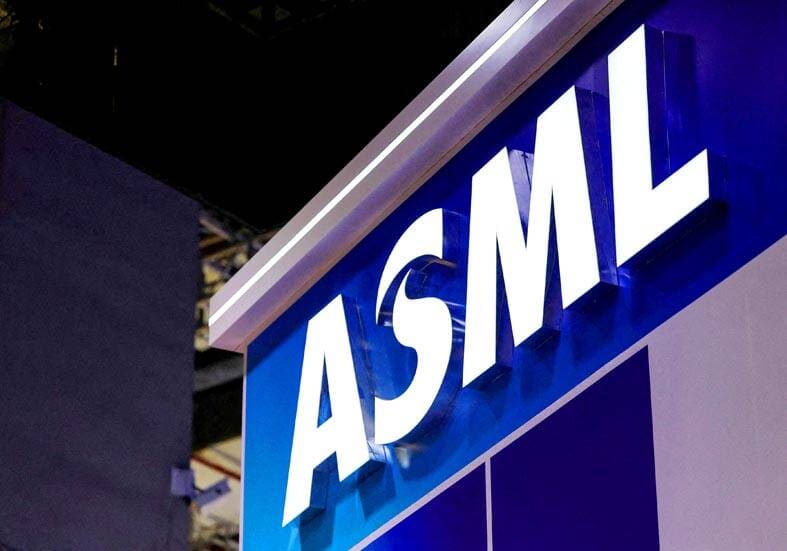
ASML Holding is exploring price increases for its semiconductor manufacturing equipment, a move that could strain relations with Taiwan Semiconductor Manufacturing Co., the Dutch company's largest customer. According to people familiar with the matter, TSMC has already begun resisting the proposed changes.
During the company's earnings call, CFO Roger Dassen addressed the pricing question directly, focusing on the low numerical aperture extreme ultraviolet lithography systems. "We keep on increasing the productivity of the low NA tools so, of course, that gives us a pretty strong runway for potential price improvements going forward," Dassen said.
He noted that extended order lead times for ASML equipment mean any pricing adjustments would not take immediate effect. The company declined to provide additional comment beyond Dassen's remarks during the earnings presentation.
Market Conditions Favor Higher Prices
The semiconductor equipment maker finds itself in a favorable position as artificial intelligence applications fuel unprecedented demand for advanced chipmaking capacity. ASML manufactures the extreme ultraviolet lithography machines essential for producing cutting-edge semiconductors, technology for which no alternative supplier exists.
RBC Capital Markets analysts observed that the strong financial performance among ASML's customer base, including TSMC, Samsung Electronics, and SK Hynix, creates an environment conducive to price adjustments. The Dutch firm raised its annual sales forecast for the second time this year, projecting net sales between 43 billion euros and 45 billion euros, exceeding analyst expectations.
The company is working to expand production capacity to meet surging orders. CEO Christophe Fouquet highlighted that Intel has begun using ASML's most advanced machine, the high numerical aperture EUV system, for actual chip production rather than just research and development. This marks a significant milestone for the commercial viability of the technology.
Cost Concerns at the Fab Level
TSMC previously stated that ASML's high-NA EUV machines, priced above 350 million euros each, are too expensive for production use, though the Taiwanese chipmaker employs them for research purposes. The potential price increase on the more widely deployed low-NA systems could compound cost pressures across the industry.
Taiwan Semiconductor declined to comment on the pricing discussions. The company recently reported record quarterly sales of NT$1.27 trillion for the second quarter, driven by AI-related demand. TSMC is simultaneously expanding its advanced packaging capabilities, with plans for three additional facilities in Phase II of the Chiayi Science Park.
Regional Manufacturing Dynamics
The pricing tension emerges as Asia's semiconductor ecosystem experiences rapid expansion. TSMC's dominance in advanced node manufacturing gives it significant negotiating leverage, yet the company's aggressive capacity buildout, including substantial investments in 2-nanometer process technology and US facilities, requires continued access to ASML's most sophisticated tools.
Samsung and SK Hynix, both major ASML customers experiencing strong results from memory chip sales tied to AI servers and data centers, would also face higher equipment costs under the proposed pricing structure. The concentration of leading-edge semiconductor manufacturing in Taiwan and South Korea amplifies the regional impact of any ASML price adjustments.
The outcome of these negotiations will likely set a precedent for equipment pricing across the semiconductor capital equipment industry, particularly as artificial intelligence continues reshaping demand patterns for advanced manufacturing capacity.
RELATED STORIES
Taiwan Indicts Nvidia Manager in Chip-Smuggling Investigation
Cheng Wei-Lun · 4 min
Integrated Systems Will Drive Next Wave of AI Growth, Says TSMC
Cheng Wei-Lun · 4 min
Manila's Chip Industry Still Stalled in Assembly While Taipei Built Fabs
Priyanka V. Rao · 4 min

Xiaomi Unveils 3nm Mobile Processor to Challenge Qualcomm and MediaTek
Cheng Wei-Lun · 3 min
Spot something wrong? Email editor@briefasia.com. We log every correction publicly.