Finance · Deals
Alibaba Secures $10 Billion in Hong Kong's Largest Follow-On Offering
Chinese tech giant raises capital to fund aggressive AI expansion as competition intensifies and hardware costs surge
KEY TAKEAWAYS
- ·Alibaba raised HK$80 billion ($10.2 billion) through 710 million shares priced at HK$112.70 each in Hong Kong's largest follow-on offering, with institutional demand reaching nearly three times the offer size.
- ·The capital will fund Alibaba's three-year commitment to spend over 380 billion yuan ($56.5 billion) on AI infrastructure, chips, and large-language models as competition intensifies and hardware costs surge.
- ·Alibaba's shares fell 8.5 percent following the announcement as investors question monetization prospects despite triple-digit AI revenue growth and the company's Qwen model becoming the world's most popular model family.
Record Capital Raise for AI Ambitions
Alibaba Group Holding sold 710 million shares at HK$112.70 each, raising HK$80 billion ($10.2 billion) in Hong Kong's largest follow-on equity offering. The deal priced at a 3.6 percent discount to the Friday close of Alibaba's US-traded shares and attracted institutional demand for nearly three times the offering size, according to people familiar with the transaction.
The company's Hong Kong-listed shares dropped 8.5 percent following the announcement, marking the steepest decline since early 2025. Alibaba faces a 90-day lockup period following the sale.
Chairman Joseph Tsai purchased approximately HK$80 million worth of shares, while CEO Eddie Wu acquired roughly HK$40 million, according to Hong Kong stock exchange filings. The insider buying came as the stock tumbled on dilution concerns.
Funding the AI Arms Race
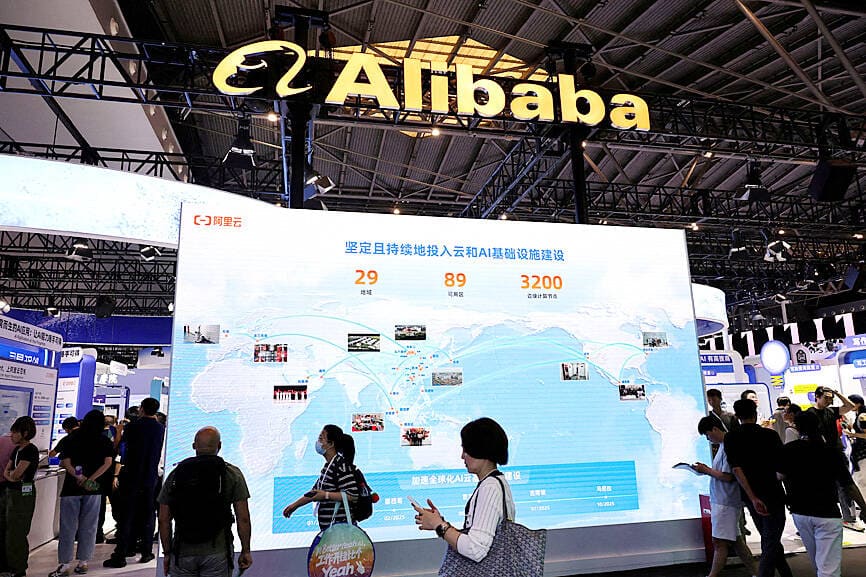
The capital injection underscores Alibaba's determination to outpace Chinese rivals in artificial intelligence development. The company has committed to spending more than 380 billion yuan ($56.5 billion) over three years on AI infrastructure, including chips, data centers, and large-language model development.
Alibaba's Qwen model family has become the world's most popular, according to the company. The achievement positions Alibaba as the Chinese tech firm closest to matching the massive outlays of US peers in AI investment.
The fundraising marks a shift from Alibaba's recent focus on shareholder returns. Vey-Sern Ling, managing director at Union Bancaire Privee, questioned the choice of equity over debt financing. The decision suggests Alibaba may need more capital than previously anticipated for AI investments and feels pressure to stay ahead of competitors, he noted.
Regional Context and Competitive Pressure
Chinese AI leaders have generally shown restraint compared to American tech providers. Meta Platforms and Alphabet have together earmarked trillions of dollars for AI development. Baidu, Alibaba's domestic rival, stated it has no plans for new share issuance, with existing funds and operating cash flow deemed sufficient, according to a company spokesperson.
Competition is intensifying across Asia's technology hubs as hardware costs spike. Memory chip prices are rising sharply, and companies fear falling behind in what many view as transformative technology.
Alibaba ramped up capital spending to nearly $10 billion in the June quarter, emphasizing long-term competitiveness over short-term profitability. The strategy comes as the company's cloud-computing division posts double-digit percentage growth and AI-related revenue climbs in triple-digit territory.
Monetization Questions Remain
Investors are scrutinizing whether Alibaba will generate adequate returns on its capital deployment. The company's concentrated AI push is compressing margins, while weak domestic consumption weighs on its core e-commerce business.
Charu Chanana, chief investment strategist at Saxo Markets, described the equity raise as significant but noted that demand from financial institutions and sovereign wealth funds should ease dilution concerns. The critical question centers on how Alibaba will monetize AI spending given subdued Chinese consumer sentiment and fierce competition in the domestic AI market, she said.
Alibaba intends to deploy proceeds to build full-stack AI capabilities, including expanded infrastructure. The company sold off assets to fund the initiative, signaling a strategic pivot toward AI leadership.
The Hong Kong offering provides Alibaba with substantial firepower to compete in the global AI race. Whether that capital translates into sustainable revenue and market leadership remains the test ahead for the Hangzhou-based giant.
RELATED STORIES
Alibaba Launches $10.2 Billion Share Placement to Fuel AI Push
Cheng Wei-Lun · 3 min
Alibaba to Raise $10.2 Billion in Placement for AI Build-Out
Cheng Wei-Lun · 2 min
Alibaba Raises $13 Billion in Hong Kong to Accelerate AI Infrastructure Push
Cheng Wei-Lun · 3 min
Alibaba Raises HK$80 Billion to Accelerate AI Infrastructure Build-Out
Cheng Wei-Lun · 3 min
Spot something wrong? Email editor@briefasia.com. We log every correction publicly.