Technology · AI
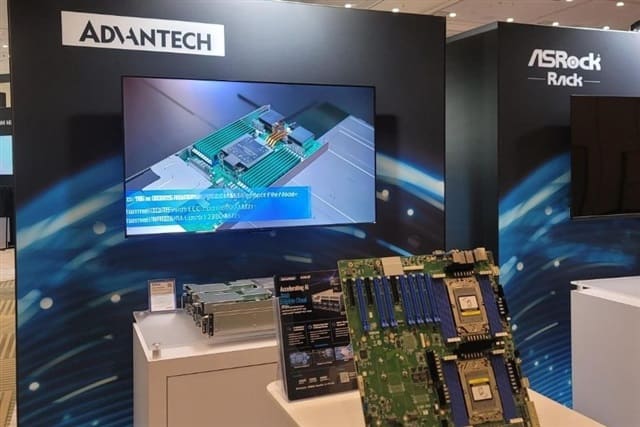
Advantech Unveils AMD EPYC 9006-Powered AI Server Platform
Industrial computing veteran extends AI infrastructure from data center to edge with latest AMD processor lineup
KEY TAKEAWAYS
- ·Advantech introduced an AI and edge computing server platform using AMD EPYC 9006 series processors at AMD Advancing AI 2026.
- ·The Taiwan-based industrial PC maker offers a full board-to-system product lineup designed to extend AI capabilities from data centers to edge industrial sites.
- ·The launch addresses growing demand in Asia-Pacific for localized AI processing in manufacturing, driven by latency requirements and data sovereignty regulations.
AMD Partnership Expands to Edge Infrastructure
Advantech announced a new AI and edge computing server platform built on AMD EPYC 9006 series processors at AMD Advancing AI 2026, according to the industrial PC manufacturer. The launch signals a broader push to deliver AI-capable infrastructure beyond centralized data centers and into factory floors, logistics hubs, and remote industrial sites across Asia.
The Taiwan-based industrial computing vendor has designed a complete product stack spanning individual boards through fully integrated systems, all optimized for the latest AMD processor architecture. This approach allows enterprises to deploy consistent AI workloads whether they operate in hyperscale facilities in Singapore or edge nodes in manufacturing zones throughout Southeast Asia and Greater China.
Processing Power Meets Industrial Requirements
The EPYC 9006 series brings higher core counts and improved power efficiency compared to previous generations, characteristics that matter in industrial environments where thermal constraints and power budgets are tighter than in traditional data centers. Advantech's server designs leverage these improvements to fit AI inferencing and model training capabilities into ruggedized chassis suitable for harsh operating conditions.
Industrial PC makers have historically focused on reliability and longevity over raw performance, but the rise of computer vision, predictive maintenance, and real-time analytics in manufacturing is changing procurement priorities. Factories in Thailand, Vietnam, and Indonesia increasingly require on-premise AI processing to meet latency requirements for quality control systems and autonomous logistics, creating demand for platforms that combine server-class compute with industrial-grade durability.
Asia's Edge Computing Build-Out
The timing aligns with accelerating edge infrastructure investment across Asia-Pacific. Governments in India, South Korea, and Japan have earmarked funding for domestic semiconductor and advanced manufacturing initiatives, many of which depend on localized AI processing to optimize production lines and reduce dependence on cloud connectivity.
Advantech operates manufacturing and R&D facilities in Taiwan, China, and several Southeast Asian countries, positioning the company to serve regional demand for localized hardware supply chains. The board-to-system product strategy also allows system integrators and original equipment manufacturers to incorporate Advantech components into custom solutions without designing processor interfaces from scratch.
AMD has been gaining share in the data center processor market, particularly in cloud and high-performance computing segments, but penetration into industrial and embedded computing represents a different competitive landscape. Intel has long dominated industrial PC platforms through established partnerships and a broad ecosystem of software and middleware tuned for its architectures. Advantech's expanded AMD lineup provides an alternative for customers seeking to diversify supplier risk or capitalize on AMD's performance-per-watt improvements in specific workloads.
Implications for Regional Hardware Ecosystems
The platform debut comes as Asian manufacturers face pressure to upgrade legacy infrastructure. Many industrial facilities still rely on programmable logic controllers and older x86 systems that lack the parallel processing capabilities required for modern AI frameworks. Retrofitting these environments with edge servers that can run containerized AI models, handle video analytics, and interface with existing control networks is a multi-year process that requires hardware vendors to balance backward compatibility with forward-looking performance.
Advantech's product roadmap will likely influence how competitors approach similar market segments. Other industrial PC makers with strong presences in Asia, including Taiwanese and Chinese firms, are evaluating their own processor partnerships as AMD and Intel both refresh server lineups in 2026. The choice of processor architecture can lock in customers for years given the software validation and integration work required, making early platform launches strategically valuable.
Edge AI adoption in Asia also intersects with data sovereignty concerns. Regulations in China, India, and several ASEAN nations increasingly require that certain categories of data remain within national borders, making local processing more attractive than routing everything to hyperscale cloud regions. Industrial customers deploying Advantech servers powered by AMD processors can keep production data, quality control images, and operational telemetry on-site, simplifying compliance while still accessing modern AI capabilities.
The full board-to-system approach lowers barriers for mid-sized manufacturers that lack in-house hardware engineering teams. A textile factory in Bangladesh or an electronics assembler in Malaysia can purchase a validated server configuration rather than assembling components and managing thermal design, firmware compatibility, and driver integration independently. This turnkey model is central to how industrial PC vendors capture revenue in markets where IT departments are lean and engineering resources are focused on production rather than infrastructure.
As the platform rolls out in the second half of 2026, adoption metrics will clarify whether Asia-Pacific industrial customers are ready to commit to edge AI infrastructure at scale or remain cautious amid economic uncertainty and uneven demand recovery in key export markets. Advantech's bet on AMD EPYC 9006 reflects confidence that the hardware foundation for distributed AI is now mature enough for deployment beyond pilot projects, but real-world performance in demanding industrial settings will ultimately determine market traction.
RELATED STORIES

Hon Hai Posts Record August Revenue on AI Server Demand
Jun-ho Seo · 3 min

Integrated Systems Will Drive Next Wave of AI Growth, Says TSMC
Cheng Wei-Lun · 4 min

Manila's Chip Industry Still Stalled in Assembly While Taipei Built Fabs
Priyanka V. Rao · 4 min

Xiaomi Unveils 3nm Mobile Processor to Challenge Qualcomm and MediaTek
Cheng Wei-Lun · 3 min
Spot something wrong? Email editor@briefasia.com. We log every correction publicly.