Finance · Deals
YMTC Parent Advances IPO Preparations as Memory Maker Captures 14% of Global NAND Market
Yangtze Memory Technologies Holding clears a critical pre-listing milestone while its chipmaking subsidiary expands enterprise storage portfolio and readies new production capacity
KEY TAKEAWAYS
- ·Yangtze Memory Technologies Holding has completed a critical pre-IPO stage as YMTC reaches 14% of the global NAND flash market.
- ·YMTC is expanding enterprise storage products for AI infrastructure and preparing to ramp 232-layer 3D NAND volume shipments in late 2026.
- ·The company plans new fabrication capacity in Wuhan with state backing, testing its ability to scale yield and quality at higher volumes.
Listing Milestone Amid Market Gains
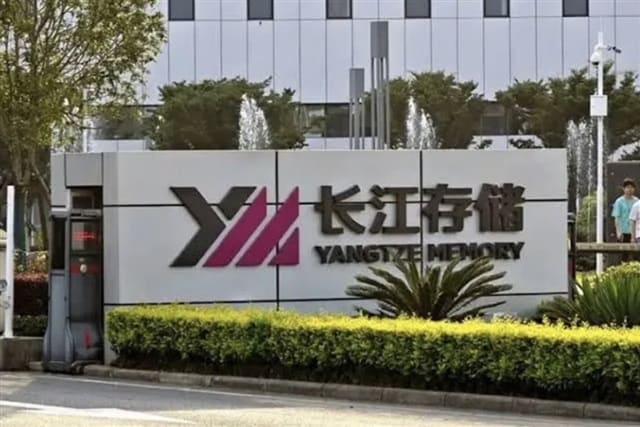
Yangtze Memory Technologies Holding, the corporate parent of Chinese NAND flash manufacturer YMTC, has cleared a critical stage in its pre-initial public offering process, positioning the entity for a potential capital markets debut as its chipmaking subsidiary strengthens its position in global memory markets.
The development arrives as YMTC secures a 14% share of the worldwide NAND flash market, a notable foothold for a manufacturer that has navigated export restrictions and supply chain constraints over the past three years. The memory maker's progress reflects broader momentum in China's semiconductor sector, where domestic firms have steadily increased their presence in commodity chip segments despite policy headwinds from Washington and allied capitals.
Yangtze Memory Technologies Holding has not disclosed a target listing date or exchange venue, though Chinese memory and logic chipmakers have increasingly pursued dual-track financing strategies that combine domestic A-share listings with international investor participation through Hong Kong or Singapore venues.
Enterprise Storage Push and AI Infrastructure Bet
YMTC has expanded its enterprise-grade storage product portfolio in recent quarters, targeting data center operators and cloud infrastructure providers that require high-density, high-endurance NAND solutions. The company's latest offerings include PCIe 5.0 solid-state drives designed for AI training clusters, where storage bandwidth and latency directly affect model training cycles and inference throughput.
Demand for enterprise NAND has accelerated alongside the buildout of generative AI infrastructure across Asia. Hyperscale operators in China, including Alibaba Cloud, Tencent Cloud, and ByteDance, have deployed hundreds of thousands of GPU servers since early 2024, each requiring terabytes of local NVMe storage to buffer training data and checkpoint model weights. YMTC's competitive pricing and willingness to customize firmware for specific workloads have helped it win design wins at several major cloud providers, according to industry supply chain data.
The memory maker has also begun sampling enterprise SSDs built on its 232-layer 3D NAND architecture, a geometry that improves bit density and reduces cost per gigabyte compared with older node technologies. Volume shipments of 232-layer products are expected to ramp in the second half of 2026, giving YMTC a process node roughly one generation behind Samsung and SK hynix but ahead of several second-tier suppliers.
Capacity Expansion and Regional Manufacturing Strategy
YMTC is preparing another round of production capacity increases at its fabrication facilities in Wuhan, part of a multi-year investment program backed by state-owned investment vehicles and provincial development funds. The expansion will add wafer starts for both mature 128-layer processes, which serve mobile and consumer applications, and advanced 232-layer lines targeting enterprise and automotive customers.
China's memory sector has received sustained government support through direct subsidies, tax incentives, and preferential financing, enabling YMTC and domestic DRAM maker CXMT to scale production even as global chip prices fluctuated. Beijing views memory manufacturing as a strategic priority, given that NAND and DRAM chips represent the largest semiconductor import categories by value and are essential for smartphones, servers, and connected vehicles.
The planned capacity additions will test YMTC's ability to ramp yield and sustain quality at higher volumes, a challenge that has tripped up emerging memory suppliers in previous cycles. The company has recruited process engineers from established players and invested in advanced metrology and defect inspection tools to tighten manufacturing control.
Capital Structure and Investor Appetite
An eventual IPO would provide Yangtze Memory Technologies Holding with a public currency for acquisitions, employee equity compensation, and balance sheet flexibility as YMTC navigates cyclical swings in memory pricing. The listing would also offer an exit path for early-stage investors, including venture capital firms and state-backed funds that participated in financing rounds before YMTC's first production ramp in 2020.
Investor appetite for Chinese semiconductor stocks has been mixed in recent quarters, with valuations sensitive to geopolitical risk, export control announcements, and memory market spot prices. Companies with demonstrated revenue growth and improving gross margins have fared better than those still in the technology development phase, suggesting that YMTC's market share gains and enterprise product traction may help underpin investor interest.
The memory sector remains capital-intensive, with each new fabrication line requiring multi-billion-dollar investments in cleanroom infrastructure, lithography tools, and deposition equipment. Access to public equity markets would diversify YMTC's funding sources and reduce reliance on policy bank loans and government subsidies, though the company is likely to maintain close ties with state investment entities given the strategic nature of its technology.
Competitive Landscape and Outlook
YMTC's 14% market share places it behind Samsung, Kioxia, Western Digital, SK hynix, and Micron in the global NAND rankings, but ahead of smaller suppliers such as Solidigm and regional players. The company's growth has come primarily at the expense of second-tier vendors rather than the top three incumbents, who continue to dominate high-margin enterprise and mobile segments.
Pricing dynamics in the NAND market have stabilized after a sharp downturn in 2023, with contract prices for mainstream densities rising modestly in the first half of 2026. Supply discipline from leading manufacturers and steady demand from smartphone, PC, and data center customers have supported price recovery, creating a more favorable environment for capacity expansions and new entrants.
YMTC's trajectory over the next 18 months will depend on its ability to sustain yield improvements, win additional enterprise design wins, and navigate any further tightening of export controls on semiconductor manufacturing equipment. The company's progress offers a case study in how state-backed industrial policy, patient capital, and access to a large domestic market can enable rapid scaling in capital-intensive technology sectors.
RELATED STORIES

Unitree Robotics Shares Surge 460 Percent in Shanghai Debut
Cheng Wei-Lun · 2 min
Xiaomi Reports 43% Profit Drop as Memory Costs Outpace Smartphone Revenue
Cheng Wei-Lun · 3 min
State Investors Step In as AI Valuations Shake Chinese Markets
Cheng Wei-Lun · 3 min

GigaDevice Semiconductor Profit Jumps More Than Tenfold on Memory Market Recovery
Cheng Wei-Lun · 3 min
Spot something wrong? Email editor@briefasia.com. We log every correction publicly.