Asia · Business
Thailand's Co-Payment Subsidy Redistributes Spending Without Lifting Demand
Industry groups say "Thai Chuay Thai Plus" has shifted sales between retailers rather than stimulating broader consumption as economic headwinds persist
KEY TAKEAWAYS
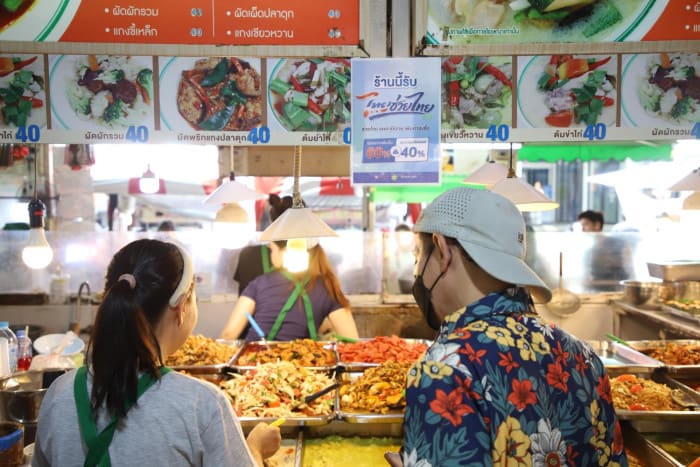
- ·Thailand's co-payment programme has lifted sales up to 50% for participating small retailers, but non-participants saw equivalent declines, indicating spending redistribution rather than net growth.
- ·Restaurant vendors using the subsidy for delivery orders reported 10% average sales gains, with spending concentrated in the first half of each month after disbursements.
- ·Industry leaders view the scheme as relief rather than stimulus, citing structural challenges including high energy costs and weak overall consumer confidence across the Thai economy.
Limited Gains for Participating Vendors
Halfway through Thailand's "Thai Chuay Thai Plus" co-payment programme, industry leaders are reporting underwhelming results. Small retailers enrolled in the subsidy scheme have experienced sales increases of up to 50% during the programme period, according to Somchai Pornrattanacharoen, honorary advisor to the Thai Wholesale and Retail Trade Association. Yet that figure masks a less encouraging reality: non-participating small operators have seen sales drop by roughly 50%, while VAT-registered businesses have also recorded declines from baseline levels.
The pattern suggests the scheme is primarily redistributing consumer spending across different retail channels rather than expanding aggregate demand. Somchai characterized the Thai economy as "deeply sluggish" and expressed skepticism that the co-payment mechanism would prompt consumers to increase their total spending beyond normal levels.
Restaurant operators participating in the programme reported more modest improvements. Chanon Koetcharoen, president of the Restaurant Association, said smaller food vendors told him sales rose by approximately 10% on average compared with periods without the subsidy. Consumer spending patterns show a pronounced concentration in the first half of each month following subsidy disbursements.
Seasonal Dynamics and Delivery Uptake
The timing of the programme has created some operational adjustments in Thailand's restaurant sector. May through September typically represents the low season for dining establishments, as monsoon rains discourage evening outings. The co-payment scheme allows customers to use subsidies through food delivery platforms, which has provided a partial offset during this traditionally weak period.
Chanon noted that restaurants normally operating only during daytime hours have extended service into evening slots, attempting to capture delivery orders from customers reluctant to venture out in wet conditions. The subsidy has made delivery orders more attractive for price-sensitive consumers during this period.
Structural Challenges Remain
Thanavath Phonvichai, president of the University of the Thai Chamber of Commerce, framed the programme as a relief measure rather than a genuine economic stimulus. He pointed to elevated energy costs and ongoing geopolitical uncertainty in the Middle East as structural headwinds facing the Thai economy. Higher energy bills are likely to claim a larger share of household budgets, leaving less discretionary income available for the types of purchases the co-payment scheme is designed to encourage.
Somchai suggested the government would achieve better results by redirecting borrowing away from cash handouts and toward infrastructure that supports small retailers. He advocated for providing free selling channels and strengthening the competitive position of smaller operators against e-commerce platforms, which continue to capture market share from traditional brick-and-mortar businesses.
Implications for Policy Design
The early performance of "Thai Chuay Thai Plus" highlights the difficulty of stimulating demand through targeted subsidies in a sluggish economic environment. When overall consumer confidence remains weak, handout programmes tend to shift spending patterns rather than lift total consumption. The pronounced sales declines among non-participating retailers suggest the scheme may be creating winners and losers within the small business sector without expanding the overall pie.
For policymakers across Southeast Asia watching Thailand's experiment, the results offer a cautionary note. Direct subsidy programmes can provide short-term relief to participating merchants and eligible consumers, but they appear less effective at addressing underlying demand weakness. The concentration of spending in the first half of each month following disbursements also suggests households are using the subsidies to smooth consumption rather than increase it, a pattern consistent with economic uncertainty and constrained budgets.
Thailand's experience may prompt other regional governments to reconsider the design of stimulus measures, particularly the balance between demand-side handouts and supply-side support for small businesses navigating digital disruption.
RELATED STORIES
Thai Retailers Push Government for Urgent Relief as Consumer Spending Stalls
Priyanka V. Rao · 4 min
Thailand Lifts 2026 Growth Forecast to 2.5% on AI Investment and Export Strength
Priyanka V. Rao · 2 min

Five ASEAN Members Back Regional Oil Stockpile as Study Nears Completion
Tran Quoc Bao · 3 min
Southeast Asian Firms Overlook Digital Pact Worth USD 2 Trillion
Lim Hui Ying · 4 min
Spot something wrong? Email editor@briefasia.com. We log every correction publicly.