Finance · Deals
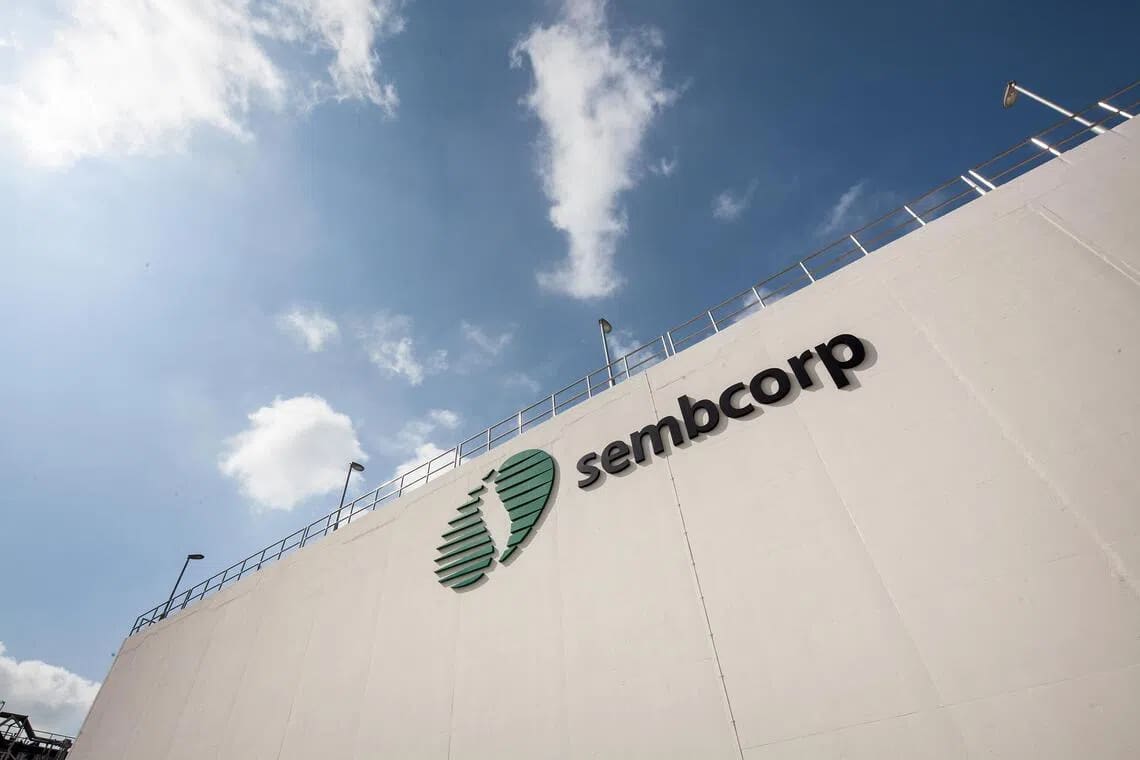
Sembcorp Raises Payout 22% Despite Profit Drop on Alinta Bet
Singapore energy group's dividend increase signals optimism around Australian acquisition and data center demand across Asia-Pacific markets
KEY TAKEAWAYS
- ·Sembcorp increased its interim dividend 22% to 11 Singapore cents per share despite underlying profit falling 25% to S$369 million in the first half of 2026.
- ·The Singapore energy group expects stronger second-half results from its June acquisition of Australian power supplier Alinta Energy and a 600-megawatt gas plant commissioning in Q4 2026.
- ·Management is targeting data center clients including Micron and developing 200 megawatts of capacity at its UK Wilton site, with additional footholds in Vietnam and Indonesia.
Dividend Hike Amid Earnings Decline
Sembcorp Industries increased its interim payout to 11 Singapore cents per share for the first six months of 2026, marking a 22% jump from the nine-cent distribution a year earlier. The move comes even as underlying profit fell to S$369 million, down 25% year-on-year from S$491 million.
The energy and urban development conglomerate disclosed the figures in an exchange filing on August 13, framing the higher payout as a statement of confidence in second-half performance. Management pointed to expected gains from Alinta Energy, the Australian power supplier Sembcorp acquired in June for approximately US$2 billion.
Group CEO Wong Kim Yin told analysts the company aims to narrow the gap with regional peers on dividend ratios. ST Engineering distributes roughly 80% of earnings, while Singapore's three major banks maintain similarly high payout levels. Sembcorp's interim ratio sits near 50%, leaving room for expansion as cash flow stabilizes post-acquisition.
Alinta Integration and Pro Forma Math
Statutory net profit plunged 72% when accounting for a S$155 million one-time transaction expense tied to the Alinta deal. Sembcorp emphasized that pro forma calculations, assuming a January closing rather than June, would lift profit to S$558 million for the half.
Wong noted Alinta has outperformed internal forecasts since consolidation began. The Australian asset base adds thermal generation and retail supply across Western Australia and South Australia, markets with tight capacity and rising industrial load from mining and liquefied natural gas exports.
Sembcorp's three operating divisions all posted declines on a reported basis. Gas and related services saw profit slip 14%, renewables dropped 48%, and integrated urban solutions also weakened. Management attributed the shortfalls to delayed commissioning schedules, lower merchant power prices in Singapore, and tariff pressure in China's wind and solar portfolios.
Data Center Pipeline Takes Shape
The company is positioning itself to capture power demand from artificial intelligence infrastructure, a theme gaining traction among Asia-Pacific utilities. Sembcorp signed a 150-megawatt long-term supply agreement with Micron Technology in January, part of a broader push to secure hyperscale clients requiring both reliability and decarbonization roadmaps.
Wong highlighted the Wilton industrial site in northeastern England as a candidate for data center expansion, with approximately 200 megawatts of capacity under development. Sembcorp also established beachheads in Vietnam and Indonesia, targeting colocation operators and cloud providers entering Southeast Asian markets.
In Singapore, a 600-megawatt hydrogen-ready combined-cycle plant remains on schedule for commissioning in the fourth quarter of 2026. The facility will support baseload requirements and provide flexibility as intermittent renewable penetration increases on the city-state's grid.
Renewable Headwinds and Nuclear Optionality
The renewables segment faces continued margin pressure in the second half. Seasonal wind patterns and feed-in tariff adjustments in China are expected to weigh on output, only partially offset by new solar capacity coming online in India.
Wong defended the unit's strategic rationale, citing energy security lessons from the Middle East conflict that drove oil prices higher. He argued that distributed solar and wind generation will retain a structural role in national energy mixes, regardless of short-term economics. If small modular reactors or other nuclear technologies gain commercial traction, Sembcorp intends to evaluate participation.
The Middle East operations performed ahead of plan despite regional tensions. Sembcorp entered a power project in Abu Dhabi during June, securing long-dated cash flows under a take-or-pay structure typical of Gulf Cooperation Council markets.
Urban Solutions and Land Monetization
The integrated urban solutions business is projected to improve in the latter half of 2026, driven by land sales in industrial estates. Sembcorp is developing 0.9 million square meters of ready-built factory space, primarily in China and Southeast Asia, which will shift from development margin to recurring lease income once tenanted.
Management expects the urban platform to benefit from supply chain reconfiguration as manufacturers diversify production footprints beyond single-country concentration. Vietnam, Indonesia, and India remain priority markets for industrial real estate expansion.
Outlook and Share Reaction
Sembcorp reiterated that second-half underlying profit will exceed the first-half result, anchored by Alinta's full-period contribution and seasonal strength in Singapore's gas business. Wong emphasized the group's commitment to dividend growth even as it reduces leverage ratios elevated by the Australian acquisition.
Shares fell nearly 3% intraday to S$5.55 before recovering slightly to close at S$5.59 on August 13. The stock has underperformed the Straits Times Index year-to-date, weighed by integration uncertainty and weaker near-term renewables outlook.
The company's ability to meet second-half targets will hinge on timely commissioning of the Singapore gas plant, stable merchant power pricing, and continued outperformance from Alinta. Investors will also watch for signs that data center demand translates into firm contracts rather than speculative pipeline additions.
RELATED STORIES

ShopeePay Becomes Payment Option for Google Play in Singapore
Priyanka V. Rao · 3 min
Singapore Data Centre REITs Post Strong H1 Gains on Cloud and AI Demand
Lim Hui Ying · 3 min
Olam Posts $1.9 Billion First-Half Profit on Saudi Agri Sale
Priyanka V. Rao · 3 min
ThaiBev's Operating Earnings Climb on Stronger Brand Spend Across Markets
Priyanka V. Rao · 4 min
Spot something wrong? Email editor@briefasia.com. We log every correction publicly.