Finance · Fintech
Philippines Digital Payments Climb to Nearly Two-Thirds of Retail Volume
Electronic transaction share jumped 7.3 percentage points in one year as Southeast Asia's cash-heavy economy accelerates its shift to digital rails
KEY TAKEAWAYS
- ·Digital payments reached 64.7 percent of Philippine retail transaction volume in 2025, rising from 57.4 percent in 2024, according to Bangko Sentral ng Pilipinas.
- ·The 7.3 percentage point annual gain outpaced prior years and puts the Philippines on track to exceed the central bank's 70 percent target by 2028.
- ·InstaPay processed 2.1 billion transactions in 2024 while e-wallets GCash and Maya reached 94 million and 65 million users respectively, driving adoption across income levels.
Digital Share Crosses Critical Threshold
Electronic payments now represent nearly two-thirds of all retail transaction volume in the Philippines, marking a decisive shift in one of Southeast Asia's historically cash-dependent economies. The share reached 64.7 percent in 2025, according to Bangko Sentral ng Pilipinas, climbing 7.3 percentage points from the 57.4 percent recorded twelve months earlier.
The central bank's data captures transaction volume rather than value, reflecting how frequently consumers and businesses reach for digital tools at checkout rather than banknotes. The metric tracks a broad spectrum of electronic channels, from QR-code payments at wet markets to corporate wire transfers, painting a picture of behavioral change across income levels and geographies.
Why the Acceleration Matters
The Philippines has long lagged regional peers in digital payment adoption. As recently as 2019, cash dominated more than 90 percent of retail transactions by volume, a legacy of fragmented banking infrastructure across 7,600 islands and low financial inclusion rates. The pandemic forced a recalibration: lockdowns shuttered physical branches, e-commerce surged, and ride-hailing platforms became de facto payment educators for millions of unbanked Filipinos.
That momentum has not only persisted but compounded. The 7.3-percentage-point annual gain in 2025 outpaced the roughly five-point increases seen in the two preceding years, suggesting the S-curve of adoption is steepening rather than plateauing. Bangko Sentral's own roadmap targets 70 percent digital share by volume by 2028, a threshold now within striking distance.
Infrastructure and Incentives Drive Uptake
Three structural forces underpin the acceleration. First, InstaPay and PESONet, the central bank's real-time and batch payment rails launched in 2017 and 2018 respectively, have reached critical mass. InstaPay alone processed 2.1 billion transactions in 2024, up from 1.4 billion the year before, with interbank transfer fees dropping to negligible levels as competition among fintech and bank participants intensified.
Second, e-wallet penetration has saturated urban and peri-urban markets. GCash reported 94 million registered users by end-2024, while Maya (formerly PayMaya) claimed 65 million. Both platforms have pushed beyond peer-to-peer transfers into merchant acceptance, utility bill payments, and micro-investment products, effectively becoming super-apps that keep users inside digital ecosystems.
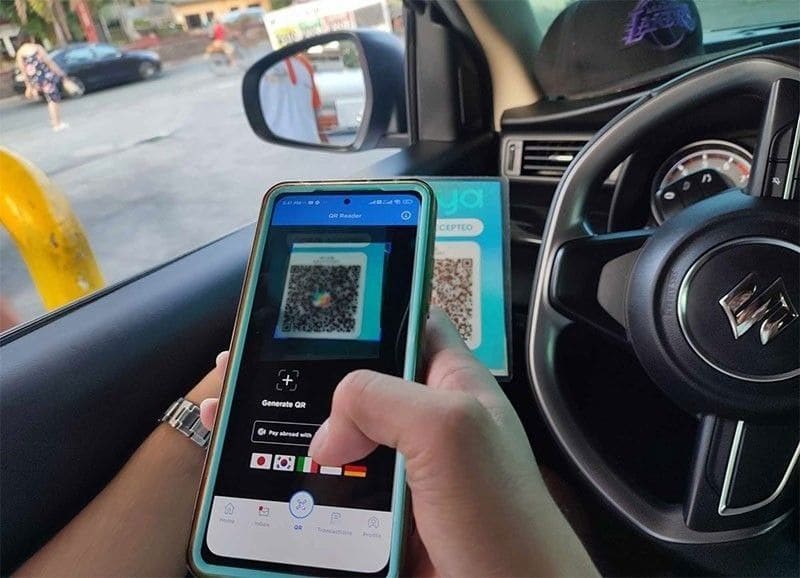
Third, regulatory nudges have accelerated merchant adoption. Bangko Sentral's QR Ph standard, which harmonized previously incompatible QR codes across wallets and banks, went live in 2020 and has since been deployed to more than 3 million merchant touchpoints. Tax incentives for small businesses that accept digital payments, introduced in 2023, have also tilted the cost-benefit calculus away from cash.
What the Numbers Don't Show
Volume share tells only part of the story. Cash still dominates by transaction value in many categories, particularly in real estate, luxury goods, and informal sectors where documentation is sparse. A 64.7 percent volume share does not mean digital payments account for the same proportion of peso flows; small, frequent transactions skew the volume metric upward.
Geography remains uneven. Metro Manila and Cebu lead adoption, with digital shares likely exceeding 75 percent, while rural provinces in Mindanao and the Visayas still see cash settle the majority of daily commerce. Infrastructure gaps, including inconsistent mobile connectivity and limited point-of-sale hardware in remote barangays, constrain the ceiling for now.
Looking Ahead
The trajectory suggests the Philippines will cross the 70 percent threshold well ahead of the central bank's 2028 target, possibly by late 2026 or early 2027 if current growth rates hold. That milestone would place the country in line with Indonesia and Vietnam, both of which crossed 70 percent in the past 18 months, and within range of Thailand's 78 percent share.
The next phase will likely test inclusivity as much as scale. Reaching the final quartile of holdouts - elderly populations, ultra-rural households, and informal vendors with thin margins - will require targeted subsidy programs, device financing, and continued investment in connectivity. The central bank has signaled interest in offline digital payment modes, such as near-field communication cards that work without internet, as a bridge technology.
For now, the 64.7 percent figure cements a narrative shift: the Philippines is no longer chasing digital payment adoption. It is managing the consequences of it.
RELATED STORIES
Tala Philippines Pushes Fair Debt Collection as Digital Lending Trust Erodes
Priyanka V. Rao · 5 min

DoubleDragon Core Earnings Jump 162% as Property Portfolio Matures
Priyanka V. Rao · 4 min
Philippine Banks Pull Back on Lending as Growth Risks Mount
Priyanka V. Rao · 3 min
Philippine Remittances Hit $3.04 Billion in June, Highest Monthly Inflow This Year
Priyanka V. Rao · 4 min
Spot something wrong? Email editor@briefasia.com. We log every correction publicly.