Real Estate · Land
Philippine Building Permits Fall 12% as Residential Activity Slows
Approved construction projects dropped to 15,436 in May while total value slipped 1.2% to ₱47.05 billion, with residential permits down 16% year-on-year
KEY TAKEAWAYS
- ·Approved building permits in the Philippines dropped 11.6% year-on-year to 15,436 projects in May, with total value declining 1.2% to ₱47.05 billion.
- ·Residential construction permits fell 16% to 10,154 projects, though aggregate value rose 1.3% to ₱24.73 billion, signaling a shift toward larger developments.
- ·Non-residential projects decreased 6% to 3,052 permits valued at ₱17.94 billion, while alteration and repair work declined 12% in project count but grew 5% in value.
Permits Decline Across Most Categories
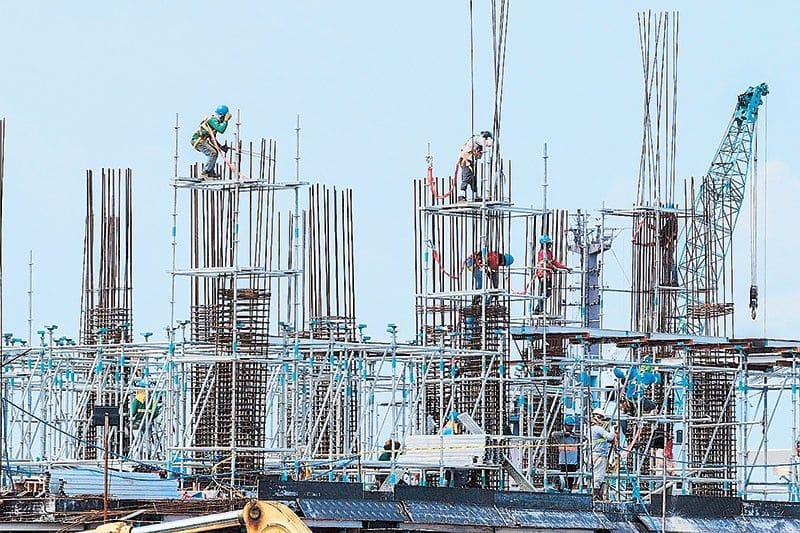
The Philippine construction sector recorded a contraction in May, with approved building permits falling to 15,436 projects from 17,466 in the same month of 2025, according to the Philippine Statistics Authority. The decline marks an 11.6% year-on-year reduction in construction activity.
Total project value reached ₱47.05 billion, down 1.2% from ₱47.64 billion a year earlier. The relatively modest value decline compared to the steeper drop in project count suggests that larger-scale developments maintained momentum even as overall activity weakened.
Residential construction bore the brunt of the slowdown. Approved residential building projects totaled 10,154 in May, representing a 16% decrease from 12,023 projects in May 2025. Despite fewer projects, the aggregate value of residential construction rose 1.3% to ₱24.73 billion from ₱24.40 billion, indicating a shift toward higher-value residential developments. Residential buildings accounted for 66% of all approved permits during the month.
Commercial and Renovation Work Contracts
Non-residential construction, which includes commercial, industrial, and institutional projects, accounted for 20% of approved permits in May. The category saw 3,052 projects approved, down 6% year-on-year. The value of these projects fell 5% to ₱17.94 billion from ₱18.91 billion in May 2025.
Addition projects, which involve expanding existing structures through increased height or floor area, declined 5% to 543 from 570 a year earlier. The value of these expansion projects dropped 11% to ₱507.45 million.
Alteration and repair work followed a similar trajectory, with project numbers falling 12% year-on-year to 1,073 in May. However, the value of these projects increased 5% to ₱2.98 billion from ₱2.85 billion, suggesting more substantial renovation work on existing structures.
Other construction projects provided the sole bright spot, rising 43% to 614 from 430 a year ago, though their aggregate value slipped 3% to ₱896.09 million from ₱919.18 million.
Regional Construction Outlook
The permit data offers an early indicator of construction activity across the Philippine archipelago. May's figures suggest developers and property owners are adopting a more cautious stance compared to the same period in 2025, particularly in the residential segment that has historically driven much of the country's building boom.
The divergence between project counts and values in the residential category points to possible consolidation, with fewer but larger developments moving forward. This pattern often emerges when financing conditions tighten or when developers concentrate resources on premium projects with stronger pre-sales or tenant commitments.
The Philippines has seen elevated construction activity in recent years, fueled by infrastructure spending, business process outsourcing expansion, and urbanization. May's contraction will be closely watched by policymakers and industry participants to determine whether it represents a temporary pause or the start of a more sustained cooling period.
Regional construction hubs including Metro Manila, Cebu, and Davao typically account for the bulk of building permit value. The national data does not break out geographic distribution, but localized demand dynamics, land availability, and infrastructure connectivity continue to shape where construction capital flows within the country.
RELATED STORIES

PhilWeb Trading Halted After P4.2 Billion JKS Tech Bet
Tran Quoc Bao · 3 min
GCash Parent Mynt Wins SEC Approval for $1.6 Billion Manila IPO
Tran Quoc Bao · 3 min
JCR Holds Philippines at A- as Growth Slows to Mid-3% Range
Priyanka V. Rao · 3 min
SM Prime Commits $72 Million to Expand Three Philippine Regional Malls
Priyanka V. Rao · 3 min
Spot something wrong? Email editor@briefasia.com. We log every correction publicly.