Asia · Business
Meralco Ordered to Refund $166 Million in Overcollections to Philippine Customers
The six-month refund program will cut typical household bills by roughly $2 as the regulator claws back unauthorized charges from the country's largest power distributor.
KEY TAKEAWAYS
- ·Manila Electric Company must refund P9.5 billion to over 8 million customers after the Energy Regulatory Commission found the utility overcharged beyond authorized rates, with residential users receiving P0.5861 per kilowatt-hour.
- ·A typical household consuming 200 kWh monthly will see bills drop by approximately P117, while the refund averages P0.3448 per kWh across all customer classes over a six-month period.
- ·The order intensifies regulatory pressure on Philippine utilities amid high regional power costs and government calls for system-loss reforms, with Meralco posting P26.5 billion net income in the first half of 2026.
Regulator Clamps Down on Overcharging
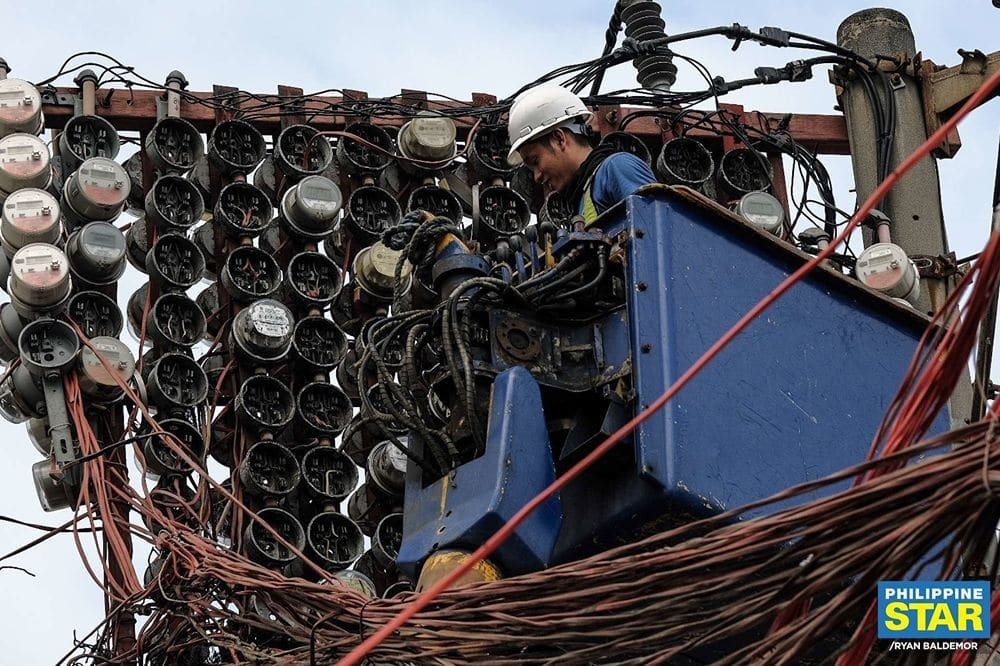
Manila Electric Company, the Philippines' dominant power distributor, must return P9.5 billion ($166 million) to more than 8 million customers after the Energy Regulatory Commission found the utility collected fees exceeding its authorized charges.
The ERC ordered the refund to be implemented over six months or until the full amount has been returned, according to the commission. Residential customers will receive a refund rate of P0.5861 per kilowatt-hour. A household consuming 200 kWh monthly, roughly the average for Metro Manila, will see its bill drop by approximately P117 ($2.05).
Across all customer classes, including commercial and industrial users, the refund averages P0.3448 per kWh. Meralco serves the capital region and surrounding provinces, accounting for roughly half of the Philippines' total electricity consumption.
Overcollection Scope and Timeline
The P9.5 billion figure represents amounts Meralco collected beyond what the regulator authorized it to charge. The ERC did not specify the time period during which the overcollections occurred, but the order comes amid heightened scrutiny of utility pricing in Southeast Asia's second-largest economy.
Power costs in the Philippines remain among the highest in the region. Industrial electricity rates averaged $0.14 per kWh in 2025, compared to $0.09 in Thailand and $0.11 in Vietnam, according to Department of Energy data. High transmission costs, aging infrastructure, and reliance on imported fuel have kept prices elevated despite repeated government pledges to bring rates down.
The refund mechanism will appear as a line-item credit on monthly bills until the full amount is exhausted. Meralco has not publicly commented on the order or disclosed whether it will contest the decision.
Regulatory Pressure Mounts
The ERC move is the latest in a series of interventions aimed at curbing what regulators see as excessive charges by distribution utilities. In his 2026 State of the Nation Address, President Ferdinand Marcos Jr. called for reforms to the system-loss allocation framework, under which utilities pass on the cost of technical losses and electricity theft to paying customers.
Meralco executives have warned that shifting the full burden of system losses to utilities could threaten financial viability, particularly for smaller distributors. The company posted net income of P26.5 billion in the first half of 2026, up from the prior year, driven by volume growth and higher distribution margins.
Consumer advocacy groups have long argued that Meralco's regulated rate of return allows it to earn comfortable profits even as households struggle with high electricity costs. The refund order may intensify those debates as the government weighs broader power-sector reforms ahead of the 2028 elections.
What Comes Next
The six-month refund window will test the ERC's enforcement capacity and Meralco's compliance systems. If the utility fails to complete the refunds on schedule, the commission has authority to impose fines and suspend rate adjustments.
For households, the P117 monthly reduction offers modest relief but does little to address structural cost pressures. Inflation in the Philippines ran at 4.8 percent year-on-year in June, well above the central bank's 2-4 percent target, with food and energy prices leading the surge.
Industry watchers will also monitor whether the ERC extends similar scrutiny to other distribution utilities. Regional cooperatives and smaller private distributors operate under looser oversight, and overcollection practices may be more widespread than the Meralco case suggests.
The refund order underscores a broader tension in Philippine energy policy: balancing the need to attract private capital into infrastructure with the political imperative to keep electricity affordable. As the country pushes to add renewable capacity and modernize its grid, that balance will only grow more delicate.
RELATED STORIES

Philippine Water Operator Earmarks $400 Million for Southeast Asia Expansion
Mariel D. Santos · 2 min
Filipino Workers Abroad Send Home $3.6 Billion in July
Mariel D. Santos · 3 min

Philippines Energy Budget Climbs 26% as Electric Vehicle Funding Surges
Priyanka V. Rao · 3 min

Southeast Asian Firms Overlook Digital Pact Worth USD 2 Trillion
Lim Hui Ying · 4 min
Spot something wrong? Email editor@briefasia.com. We log every correction publicly.