Asia · Politics
Manila's Coconut Authority Pushes for Price-Setting Powers as Farmers Face Global Market Squeeze
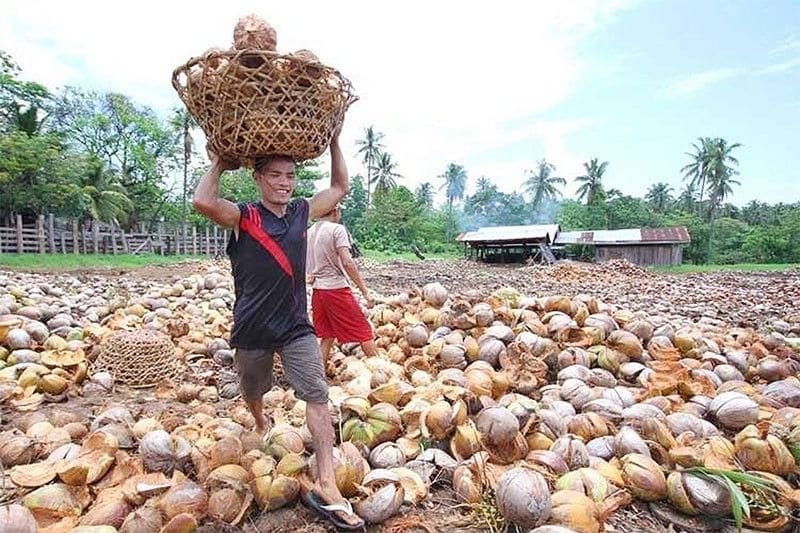
The Philippine Coconut Authority wants legislative authority to establish floor prices for copra, a move that would mark a shift toward direct market intervention in one of Southeast Asia's largest coconut economies.
KEY TAKEAWAYS
- ·The Philippine Coconut Authority is seeking legislative amendments to gain regulatory power over copra pricing, with farmgate prices currently averaging P44.52 per kilogram amid global market pressures.
- ·The proposed charter changes would allow the PCA to set floor prices for farmers while consulting with private processors, marking a shift toward direct market intervention in a sector that exports 80 percent of production.
- ·The initiative reflects broader debates across Philippine agriculture about government intervention in commodity markets, with potential implications for other smallholder crops facing volatile global prices.
Legislative Push for Market Intervention
The Philippine Coconut Authority is pursuing legislative amendments that would grant the agency direct authority over copra pricing, a departure from its current market-observation role. Joseph Cezar Deligero, the authority's head executive assistant, confirmed that officials have begun discussions with lawmakers in both chambers of Congress to sponsor legislation that would rewrite the agency's charter.
The proposed changes would enable the PCA to establish minimum prices that buyers must pay farmers for copra, the dried coconut kernel that serves as the raw material for coconut oil and other derivative products. Under the current framework, the agency lacks any statutory power to influence market rates, leaving farmers exposed to price movements dictated largely by international demand and supply dynamics.
Deligero explained that the Philippines exports roughly 80 percent of its coconut production, making domestic farmgate prices highly sensitive to shifts in global commodity markets. When international buyers reduce their purchases or when competing suppliers flood the market, Philippine farmers bear the immediate financial impact.
Current Price Environment and Regional Context
Recent data from the PCA shows farmgate copra prices averaging P44.52 per kilogram, with millgate rates at P52.54 per kilogram. These figures represent a significant decline from price levels recorded before the recent downturn in global coconut oil demand. Deligero attributed the drop to weaker international appetite for coconut oil, disruptions in export logistics, and an oversupply of production across major coconut-growing regions.
The Philippines remains one of the world's largest coconut producers, alongside Indonesia and India. All three countries have grappled with similar price pressures, though each has adopted different policy responses. Indonesia has experimented with export levies and biodiesel mandates to support domestic prices, while India has periodically opened and closed import windows to manage supply. The Philippines, by contrast, has historically relied on market mechanisms with limited government intervention in price formation.
This hands-off approach has left Filipino coconut farmers vulnerable during periods of global oversupply. The sector employs millions of smallholder farmers, many of whom depend on copra sales as their primary source of income. When prices fall below production costs, farmers face acute financial stress, often lacking alternative crops or income streams.
Balancing Farmer Interests and Industry Input
The PCA's proposal envisions a regulatory structure that would balance farmer protection with the operational requirements of private processors and manufacturers. Deligero noted that any floor price mechanism would need to account for the cost structures of coconut oil mills and refineries, which operate on thin margins and compete in global markets.
The authority is conducting internal reviews of its existing charter while engaging in consultations with industry stakeholders, including coconut oil manufacturers and copra processors. These discussions aim to identify a pricing framework that stabilizes farmer incomes without undermining the competitiveness of Philippine coconut products in export markets.
Deligero emphasized that the agency is coordinating with its regional offices to gather input from farming communities and to assess local price variations across the archipelago. The Philippines' coconut belt stretches across multiple island groups, and production costs vary significantly depending on farm size, irrigation access, and proximity to processing facilities.
Institutional Support and Financial Access
Beyond the push for price-setting authority, the PCA has been working to improve farmers' access to credit through partnerships with financial institutions. These arrangements facilitate loan approvals for smallholders who need working capital for farm inputs, equipment, or to bridge income gaps during lean periods.
However, credit access alone has proven insufficient to shield farmers from the effects of sustained price declines. Without a mechanism to ensure minimum returns, many farmers remain reluctant to invest in productivity improvements or to expand planted area, limiting the sector's long-term growth potential.
The proposed legislative changes would represent a significant expansion of the PCA's mandate. Since its establishment, the authority has functioned primarily as a policy coordination and development agency, providing technical assistance and managing replanting programs. Direct price regulation would place it in a more interventionist role, similar to that of rice and sugar regulatory bodies that have historically set price floors and managed buffer stocks.
Broader Implications for Philippine Agriculture
The PCA's initiative comes at a time when several Philippine agricultural agencies are reassessing their roles in market stabilization. The country has long debated the appropriate balance between free-market principles and government intervention in commodity pricing, particularly for crops where smallholder farmers dominate production.
Proponents of the PCA's proposal argue that price floors are necessary to prevent farmer distress sales and to ensure the viability of coconut farming as a livelihood. Critics, however, caution that price controls can distort market signals, lead to inefficiencies, and potentially disadvantage Philippine exporters if domestic floor prices rise above levels that international buyers are willing to pay.
The outcome of the PCA's legislative push will likely influence policy debates in other agricultural sectors. If Congress approves the charter amendments, it could set a precedent for similar interventions in crops like coffee, cacao, and rubber, where smallholder farmers also face volatile global prices.
Deligero acknowledged that the agency is still in the early stages of formulating the specifics of its proposal. Key questions remain about how floor prices would be calculated, how frequently they would be adjusted, and what enforcement mechanisms would be employed. The PCA will need to build consensus among lawmakers, farmers, and industry players before any legislation can advance.
What Comes Next
The timeline for legislative action remains uncertain. Philippine Congress typically moves slowly on charter amendments, and the PCA's proposal will need to compete for attention with other agricultural policy priorities. Deligero indicated that the agency is preparing detailed position papers and economic analyses to support its case before both the House of Representatives and the Senate.
In the meantime, coconut farmers continue to navigate a challenging price environment. The PCA's regional offices have been tasked with monitoring local copra markets and providing farmers with price information and market intelligence, though these measures offer limited relief in the absence of binding price supports.
The broader question facing Philippine policymakers is whether direct price intervention represents a sustainable solution to the structural challenges facing the coconut sector, or whether resources would be better directed toward productivity improvements, value-added processing, and market diversification. The PCA's legislative campaign will test the political appetite for a more activist government role in one of the country's oldest and most important agricultural industries.
RELATED STORIES

Philippine Water Operator Earmarks $400 Million for Southeast Asia Expansion
Mariel D. Santos · 2 min

Philippines Energy Budget Climbs 26% as Electric Vehicle Funding Surges
Priyanka V. Rao · 3 min
Philippine Manufacturing Expands at Fastest Pace Since 2016
Priyanka V. Rao · 3 min

Filipino Household Income Rose 16% but Spending Outpaced Gains
Mariel D. Santos · 3 min
Spot something wrong? Email editor@briefasia.com. We log every correction publicly.