Technology · AI
Kioxia's Market Value Drops 50% as AI Euphoria Cools
The Japanese chipmaker briefly surpassed Toyota in market capitalization but has fallen to fourth place as investor sentiment toward AI stocks shifts
KEY TAKEAWAYS
- ·Kioxia's market capitalization has fallen 50% from its peak and dropped from second to fourth place among Japanese companies as traders reassess AI valuations.
- ·The memory chipmaker briefly exceeded Toyota's market value in mid-June during the AI-driven semiconductor rally that dominated the first half of 2026.
- ·The correction reflects broader skepticism about AI infrastructure spending, with cloud providers signaling more moderate capital expenditure plans for the second half of the year.
A Sharp Reversal
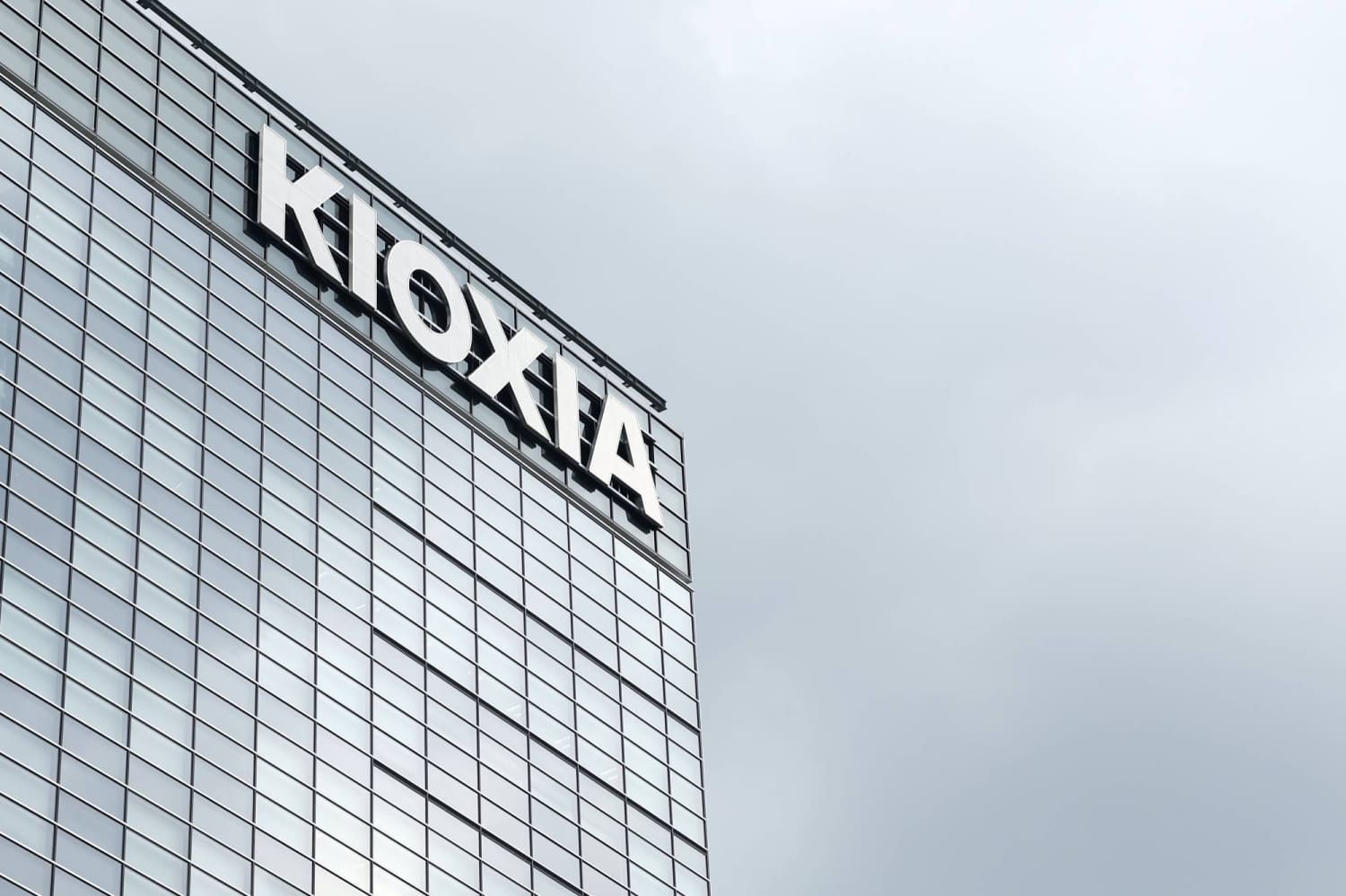
Kioxia's market capitalization has fallen by half from its recent peak as investors grow increasingly skeptical about artificial intelligence valuations across the semiconductor sector. The Japanese memory chip manufacturer briefly overtook Toyota to become one of Japan's most valuable companies in mid-June, but now sits in fourth position among the country's publicly traded firms.
The reversal marks a dramatic shift in sentiment toward AI-related equities, which had driven extraordinary gains across Asia's chip industry through the first half of 2026. Kioxia, which specializes in flash memory and storage solutions used in data centers and AI infrastructure, rode the wave of optimism surrounding generative AI demand to valuations that eclipsed even Japan's largest automaker.
The Broader Semiconductor Correction
The decline in Kioxia's market value reflects a wider reassessment of chip stocks that had surged on expectations of sustained AI-driven demand. Memory chipmakers in particular benefited from forecasts that data center expansion and AI model training would require exponential increases in high-bandwidth memory and storage capacity.
Tokyo's semiconductor index has retreated alongside global peers as earnings reports from major tech companies revealed more modest AI infrastructure spending plans than markets had anticipated. Several large cloud providers indicated they would moderate capital expenditures in the second half of 2026, citing the need to improve utilization rates of existing facilities before committing to new capacity.
The shift has been particularly pronounced in Japan, where Kioxia and other chip manufacturers had seen valuations reach levels that some analysts characterized as disconnected from near-term fundamentals. The company's brief ascent above Toyota in market capitalization drew attention to the extent of the rally, with financial media highlighting the contrast between a memory chip producer and a century-old industrial conglomerate.
Memory Market Dynamics
Kioxia operates in a cyclical industry where pricing and profitability fluctuate with supply-demand balances. The NAND flash memory segment, where the company holds significant market share, experienced tight supply conditions through late 2025 and early 2026 as manufacturers exercised discipline on capacity additions following a prolonged downturn.
Prices for enterprise solid-state drives and high-density storage products climbed through the first quarter of 2026, supporting margin expansion across the sector. However, recent weeks have seen contract pricing soften as hyperscale customers negotiate more aggressively and new fabrication capacity begins ramping in South Korea and China.
Industry observers note that memory chip valuations tend to peak during periods of strong pricing momentum, often ahead of cyclical turns when supply additions eventually outpace demand growth. The current correction may reflect market participants positioning for a more balanced supply environment in 2027.
Implications for Japan's Tech Sector
The volatility in Kioxia's valuation underscores the challenges facing Japan's semiconductor industry as it seeks to reclaim a larger role in global chip production. Tokyo has committed substantial subsidies to support domestic fabrication capacity, particularly in advanced logic and memory technologies considered strategic for economic security.
Kioxia emerged from Toshiba's memory business through a complex restructuring and remains a key player in the government's semiconductor revitalization strategy. The company has invested in next-generation 3D NAND technology and maintains joint ventures with Western Digital, giving it access to leading-edge manufacturing processes.
The recent market turbulence may test investor appetite for additional capital raises or expansion plans in the sector. Japanese chipmakers face intense competition from Samsung and SK Hynix in memory, and from TSMC and Intel in logic manufacturing, requiring sustained investment to maintain technological competitiveness.
What Comes Next
Attention now turns to Kioxia's upcoming earnings guidance and commentary on demand trends for the remainder of 2026. The company's management will likely face questions about inventory levels at major customers, pricing trajectories, and the timing of new capacity coming online.
Broader market sentiment toward AI infrastructure spending will continue to drive near-term trading in the stock. If cloud providers and enterprise customers resume accelerated deployments in response to new AI model releases or application breakthroughs, memory demand could reaccelerate. Conversely, an extended pause in data center expansion would pressure both volumes and pricing across the NAND and DRAM markets.
The swift reversal from peak valuations serves as a reminder of the volatility inherent in semiconductor equities, particularly during periods of rapid technological transition. For Kioxia, navigating the next phase will require balancing capacity investments against cyclical demand patterns while maintaining the technological edge necessary to compete in an increasingly consolidated global memory market.
RELATED STORIES
Preferred Networks Eyes Public Listing to Scale AI Chip Production
Aiko Nakamura · 2 min
Kioxia Pushes Flash Memory to Replace DRAM Amid Market Squeeze
Jun-ho Seo · 3 min

Fujitsu to Exit Commodity Hardware as AI Shifts Production Strategy
Aiko Nakamura · 4 min
Japan's Military Adopts NTT Optical Network for AI-Ready Defense Communications
Aiko Nakamura · 3 min
Spot something wrong? Email editor@briefasia.com. We log every correction publicly.