Asia · Business
Indonesian Investors Buy More Gold Than Thailand and Vietnam Combined
Southeast Asia's largest economy recorded 38.1 tonnes of gold bar and coin sales in the first half, driven by currency concerns and a new government bullion roadmap.
KEY TAKEAWAYS
- ·Indonesia recorded 38.1 tonnes of gold bar and coin sales in the first half of 2026, exceeding the combined total of Thailand and Vietnam at 36.5 tonnes.
- ·The government launched a national bullion system roadmap earlier this year to strengthen domestic gold infrastructure and support downstream development.
- ·Second-quarter bar and coin demand in Indonesia surged 40 percent year-on-year, driven by currency weakness and economic uncertainty.
Southeast Asia's Gold Buying Champion
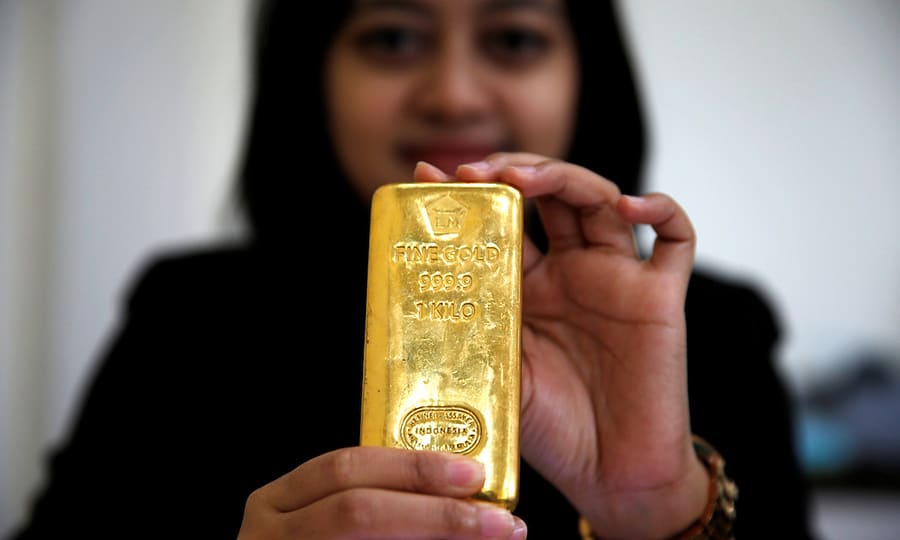
Indonesia purchased 38.1 tonnes of gold bars and coins in the first half of 2026, outpacing the combined 36.5 tonnes bought by Thailand and Vietnam during the same period, according to the World Gold Council.
The archipelago nation's appetite for physical gold also dwarfed that of Malaysia and Singapore, which together accounted for just 12.1 tonnes. In the second quarter alone, Indonesia recorded 14.5 tonnes in sales, the highest in Southeast Asia.
The surge reflects a sharp pivot toward gold as a wealth preservation tool amid economic headwinds. Currency depreciation and worries about domestic growth prospects have pushed Indonesian savers and investors to allocate more capital into bullion.
Government Backs Gold Infrastructure
Jakarta formalized its commitment to the sector earlier this year by unveiling a national bullion system roadmap. The initiative aims to build a more robust domestic gold ecosystem and support downstream activities in mining and refining.
The policy framework signals that gold is no longer viewed solely as a retail investment product but as a strategic national asset class. By strengthening local infrastructure, authorities hope to capture more value from Indonesia's position as a major gold producer and consumer.
Second-Quarter Momentum Accelerates
Indonesia ranked among the world's top-performing gold markets in the second quarter, with bar and coin demand jumping 40 percent year-on-year, according to the World Gold Council. The combination of macroeconomic uncertainty and proactive government policy created conditions for sustained buying.
Across Southeast Asia, which the council defines as Indonesia, Malaysia, Singapore, Thailand, and Vietnam, gold bar and coin sales reached 36.7 tonnes in the second quarter, up 7.6 percent from the prior year. Indonesia accounted for nearly 40 percent of that regional total.
Jewelry Demand Tells a Different Story
While investment demand surged, Indonesian gold jewelry purchases continued a long slide. Sales dropped 10 percent year-on-year to 3 tonnes in the second quarter, marking the thirteenth consecutive annual decline.
Consumers facing tight household budgets have shifted toward lower-purity jewelry, which costs less but carries a smaller gold content. The trend underscores a bifurcation in the market: wealthier buyers accumulate bullion for investment, while middle-income households scale back on decorative gold purchases.
Global Context and Regional Positioning
Globally, bar and coin demand fell 3 percent to 307.1 tonnes in the second quarter. Indonesia's outperformance stands in contrast to softer buying in Western markets, where exchange-traded fund flows have been more volatile.
Louise Street, a senior analyst at the World Gold Council, expects bullion investment to drive growth in the second half of the year. She noted that over-the-counter activity and demand from Asian investors are likely to play a larger role, while Western interest may hinge more closely on real yields, U.S. monetary policy expectations, and dollar strength.
Indonesia's position as the region's gold-buying leader reflects both structural factors, including its large population and expanding middle class, and cyclical pressures such as currency volatility. The government's new roadmap could further entrench the country's role as a regional hub for gold trade and investment, particularly if domestic refining capacity expands and regulatory clarity improves.
The divergence between investment and jewelry demand also highlights the dual nature of gold markets in emerging Asia: a store of value for those with capital to protect, and a luxury good increasingly out of reach for lower-income consumers navigating inflation and wage stagnation.
RELATED STORIES

Five ASEAN Members Back Regional Oil Stockpile as Study Nears Completion
Tran Quoc Bao · 3 min

Indonesian Digital Banks Outpace Regional Peers on Deposits and Loan Growth
Priyanka V. Rao · 3 min

Southeast Asian Firms Overlook Digital Pact Worth USD 2 Trillion
Lim Hui Ying · 4 min

Southeast Asia's Data Centre Rush Faces Power Grid Reality
Mariel D. Santos · 4 min
Spot something wrong? Email editor@briefasia.com. We log every correction publicly.