Perspectives · Opinion
The Hidden Arithmetic of Tax Relief
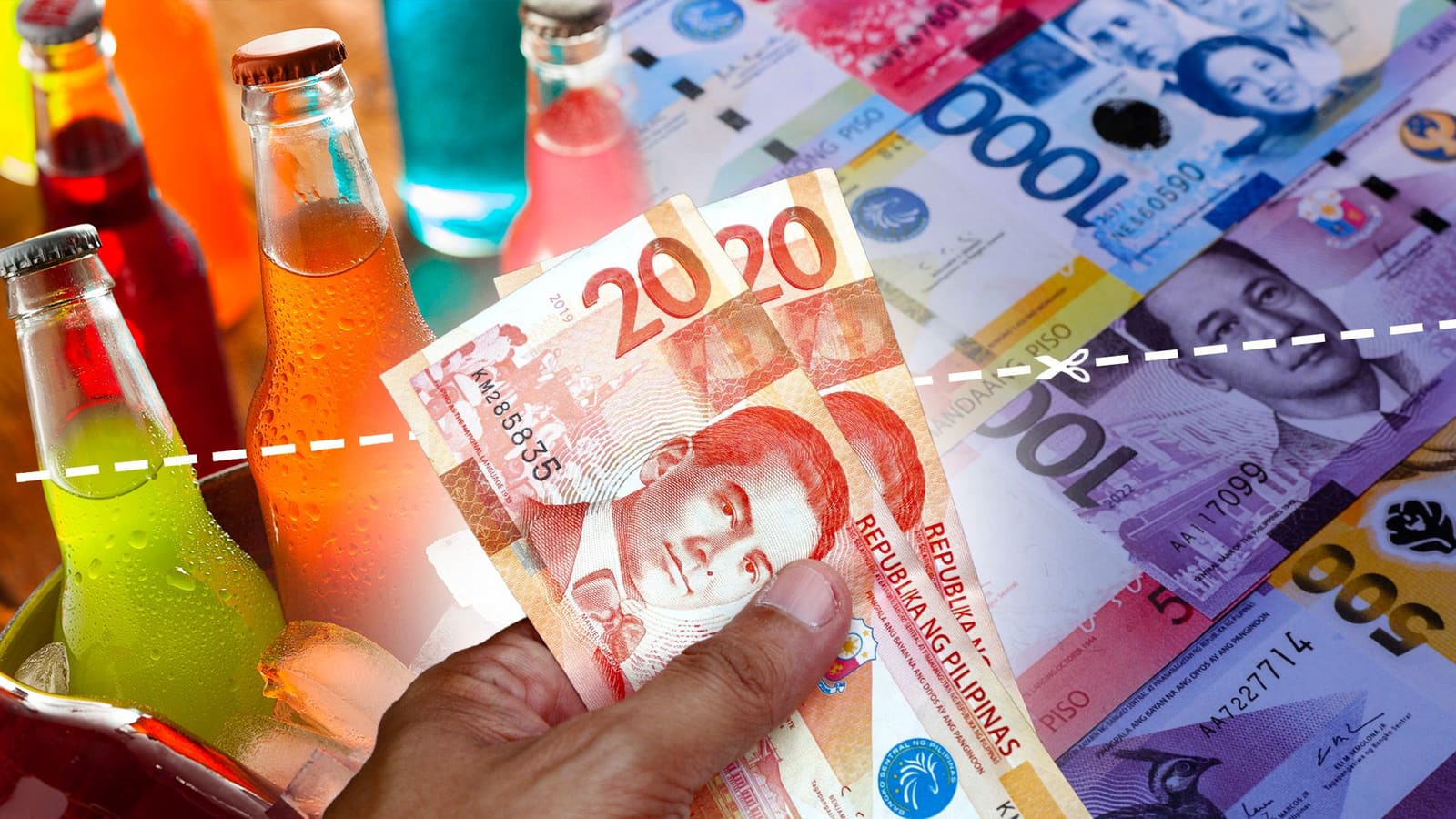
When Manila cuts income taxes but triples beverage levies, the real question is how much purchasing power survives the shift from payroll to point-of-sale.
KEY TAKEAWAYS
- ·The Philippine government's ProGRESS package would raise the income tax exemption threshold to PHP 350,000 while increasing sweetened beverage excise taxes by 233 percent, from PHP 6 to PHP 20 per liter for sugar-based drinks and PHP 12 to PHP 40 for high-fructose corn syrup beverages.
- ·Government projections show the sweetened beverage tax increase alone could recover approximately PHP 296.97 billion from 2027 through 2030, nearly matching the PHP 300.33 billion surrendered through personal income tax restructuring.
- ·When TRAIN imposed sweetened beverage taxes in 2018, prices rose an average 20.6 percent in neighborhood stores within one month, while sales declined roughly 8.7 percent, suggesting consumers ultimately bear much of the tax burden.
- ·The proposed consumption tax increases arrive as Philippine household consumption growth weakened to 2.8 percent in the second quarter and inflation remained elevated at 6.2 percent in July.
The Trade-Off Nobody Calculates
Manila's proposed ProGRESS tax package promises to raise the personal income tax exemption threshold to PHP 350,000, delivering immediate relief to millions of Filipino workers. To offset the revenue loss, the Department of Finance plans to increase the excise tax on sweetened beverages from PHP 6 to PHP 20 per liter for sugar-based drinks, and from PHP 12 to PHP 40 for beverages using high-fructose corn syrup. Both represent 233 percent increases.
The mechanism is straightforward: government gives workers more take-home pay, then attempts to recapture part of that revenue when consumers reach the checkout counter. What remains unclear is whether Filipinos emerge genuinely better off, or whether they are simply trading one form of taxation for another.
The distinction matters because consumption taxes operate differently from income taxes. A worker sees tax relief immediately on their payslip. But consumption taxes dissolve across hundreds of small transactions: a few pesos at a neighborhood store, a slightly higher supermarket bill, a reformulated product or a smaller package size. No household receives a monthly statement itemizing how much of their income tax savings they returned through higher consumption levies.
Yet that accounting determines whether ProGRESS delivers real relief or merely relocates the burden.
Who Carries the Cost
The structure of beverage taxation creates a cascade effect. Between the manufacturer and the final consumer stands a chain of suppliers, logistics providers, distributors, wholesalers and retailers. When excise duties rise sharply, someone in that chain must absorb the increase, pass it forward, alter the product or accept lower sales volume.
Evidence from the Philippines' own recent experience offers guidance. When the TRAIN tax reform imposed sweetened beverage taxes in 2018, researchers found that prices of taxable beverages increased an average of 20.6 percent in neighborhood stores and 16.6 percent in supermarkets within one month. Carbonated drink prices rose approximately 21 percent, while sales in small stores declined roughly 8.7 percent.
Companies adjusted. Coca-Cola secured regulatory approval to change its sweetener formulation after TRAIN imposed higher rates on high-fructose corn syrup. Manufacturers reformulated products, retailers raised prices, consumers switched brands and profit margins compressed. The tax burden dispersed across the system, but it did not disappear.
Consider a household purchasing a two-liter bottle for a Sunday meal. Under current rates, a qualifying two-liter drink carries PHP 12 in statutory excise. Under ProGRESS, that becomes PHP 40, a PHP 28 difference. For products using high-fructose corn syrup, the excise rises from PHP 24 to PHP 80 on two liters, a PHP 56 jump.
Shelf prices will not necessarily rise by the full statutory amount. Competitive pressure may prevent complete pass-through. Manufacturers may absorb part of the increase or change package sizes. But the cost lands somewhere, and consumption taxes ultimately tend to settle on the consumer.
The Payslip Versus the Shopping Basket
The visibility gap between income tax relief and consumption tax increases creates a political advantage. A worker who pays PHP 1,250 less in monthly income tax notices the benefit immediately. The corresponding consumption tax burden, dispersed across dozens of purchases over weeks and months, remains largely invisible.
Yet the net effect is what determines whether a household's real purchasing power has expanded or contracted.
According to the Department of Finance, ProGRESS would surrender approximately PHP 326.92 billion through tax relief measures from 2027 through 2030, while revenue-raising provisions would generate about PHP 518.71 billion. The government does not merely recover what it gives away; it emerges roughly PHP 191.8 billion ahead.
The numbers become more revealing when examined closely. The proposed sweetened beverage tax increase is projected to raise approximately PHP 296.97 billion over the same period, compared with about PHP 300.33 billion the government expects to surrender through personal income tax restructuring. The beverage levy alone could therefore recover nearly 99 centavos for every peso of revenue surrendered through income tax cuts.
That reframes the debate. The question is no longer simply whether raising the tax-free threshold to PHP 350,000 is generous. It is whether Filipinos genuinely receive tax relief or whether the government is merely shifting the collection point from payroll to point-of-sale.
Timing and Household Reality
The macroeconomic backdrop makes the timing of this shift significant. Inflation stood at 6.2 percent in July, with housing, water, electricity and gas inflation reaching 8.2 percent. Second-quarter GDP growth slowed to 2.3 percent, while household consumption growth weakened to 2.8 percent.
The Philippine consumer is losing momentum. Imposing substantially higher consumption taxes in this environment risks further dampening household spending, which remains the primary driver of domestic growth.
What is missing from the policy debate is granular household arithmetic. Take Filipinos earning PHP 250,000, PHP 350,000, PHP 500,000, PHP 750,000 and PHP 1 million annually. Calculate their income tax savings under ProGRESS. Estimate the additional consumption tax burden they are likely to bear, based on average household spending patterns. Show the net gain or loss.
That number determines whether ProGRESS deserves its name.
The Real Beneficiary
The argument for taxing sweetened beverages rests partly on public health grounds, and that case has merit. Excessive sugar consumption contributes to diabetes, obesity and related health conditions, all of which impose costs on the healthcare system and society. Higher taxes can reduce consumption and nudge consumers toward healthier alternatives.
But ProGRESS is not primarily a public health measure. It is a revenue measure designed to offset income tax cuts. The health rationale provides political cover for a fiscal maneuver.
If the government puts PHP 1,250 back into a household's pocket every month through lower income taxes but higher consumption costs take PHP 1,000 away, the tax computation says the household is PHP 15,000 richer for the year. In reality, the household is only PHP 3,000 better off.
And if those consumption costs exceed PHP 1,250 per month, the household has received tax relief on paper while becoming poorer in practice.
What Congress Should Demand
Before advancing ProGRESS into law, Congress should require the Department of Finance to produce transparent household-level impact analysis. Show the income tax savings for representative households across income brackets. Estimate the additional consumption tax burden, incorporating pass-through rates observed under TRAIN. Present the net effect.
Without that analysis, legislators are voting on a package whose real distributional impact remains opaque.
The public health case for taxing sugar is separate and should be evaluated on its own merits. The revenue case for higher consumption taxes should be weighed against alternative sources. And the promise of income tax relief should be tested against the reality of what households can actually buy with their take-home pay.
Tax policy is ultimately about choices. Governments choose where to collect revenue, how much to collect and from whom. Taxpayers deserve to know not just what they are being promised, but what they are actually receiving.
When PHP 6 becomes PHP 20 and PHP 12 becomes PHP 40, someone pays the difference. Find that person and you will discover who is really financing ProGRESS.
RELATED STORIES
Philippines Holds A- Credit Rating as Infrastructure Delays Cloud Growth
Priyanka V. Rao · 3 min

Epson Begins Industrial Robot Production in the Philippines
Priyanka V. Rao · 3 min
Manila Taps Tokyo Expertise to Modernize Provincial Water Infrastructure
Priyanka V. Rao · 5 min
I-Remit Approves $400,000 Capital Infusion as Vice Chairman Emerges With 47% Stake
Priyanka V. Rao · 2 min
Spot something wrong? Email editor@briefasia.com. We log every correction publicly.