After midnight in Manila, a new dining economy is waking up
Driven by shift workers, a creative class on a nocturnal clock and a generation priced out of daytime restaurants, the Philippine capital is building one of Asia's most vital after-dark food scenes.

- ·Capital rotates out of US/EU equities into hard ASEAN infrastructure.
- ·Data centres, power transmission and ports are the three priority lanes.
- ·Vietnam, Indonesia and the Philippines absorb the largest allocations.
MANILA — At 1:15 in the morning on a Thursday, the queue outside a converted hardware store in Poblacion is forty people deep and entirely unbothered by the hour. Inside, a chef who closed his fine-dining restaurant in Makati last year is plating grilled tuna collar and garlic rice for a room of nurses coming off shift, call-centre agents on their lunch break, and a designer who has not seen daylight, she says cheerfully, in a week. In Manila, this is dinner.
Across the sprawl of the Philippine capital, an after-dark dining economy is coming into its own — not the tired club-adjacent food of a decade ago but a serious, varied, increasingly ambitious scene that does its best business between midnight and four. It is the product of forces specific to Manila, and it has produced something other Asian cities are quietly studying.
The drivers are structural and they are unromantic: a vast workforce on a nocturnal clock, a creative class that has inverted its hours, and a generation of diners for whom the late-night table is simply more affordable and more alive than the daytime one. Manila did not decide to become a 24-hour food city. Its economy decided for it.
The graveyard shift built it
Start with the call centres. The Philippines remains one of the world's largest hubs for business-process outsourcing, and hundreds of thousands of agents work through the night to serve clients in American time zones. Their lunch break falls at one in the morning; their commute home is at dawn. For two decades they have needed somewhere to eat, and the market has steadily, then suddenly, risen to meet them.
What began as 24-hour fast-food and roadside carinderia has matured into something far more interesting. The agents are no longer satisfied with reheated rice meals, and they have disposable income; chefs have noticed. The Poblacion tuna-collar operation, several ramen counters that open at 11pm, and a clutch of late-night Filipino-modern kitchens are all chasing the same well-paid, wide-awake, midnight customer.
The economics are unusual and they favour the bold. Late-night rents in formerly dead commercial strips are a fraction of daytime Makati's, labour is available among a workforce already on nocturnal hours, and the competition, while growing, is nothing like the saturated daylight market. For an ambitious chef priced out of a conventional restaurant, midnight is an arbitrage.
The chefs who flipped the clock
The most telling migration is of talent. A cohort of chefs trained in Manila's fine-dining boom — the tasting-menu restaurants that proliferated in the late 2010s and then thinned painfully in the lean years that followed — has reinvented itself after dark, trading white tablecloths for high-volume, lower-priced, technically serious late-night food.
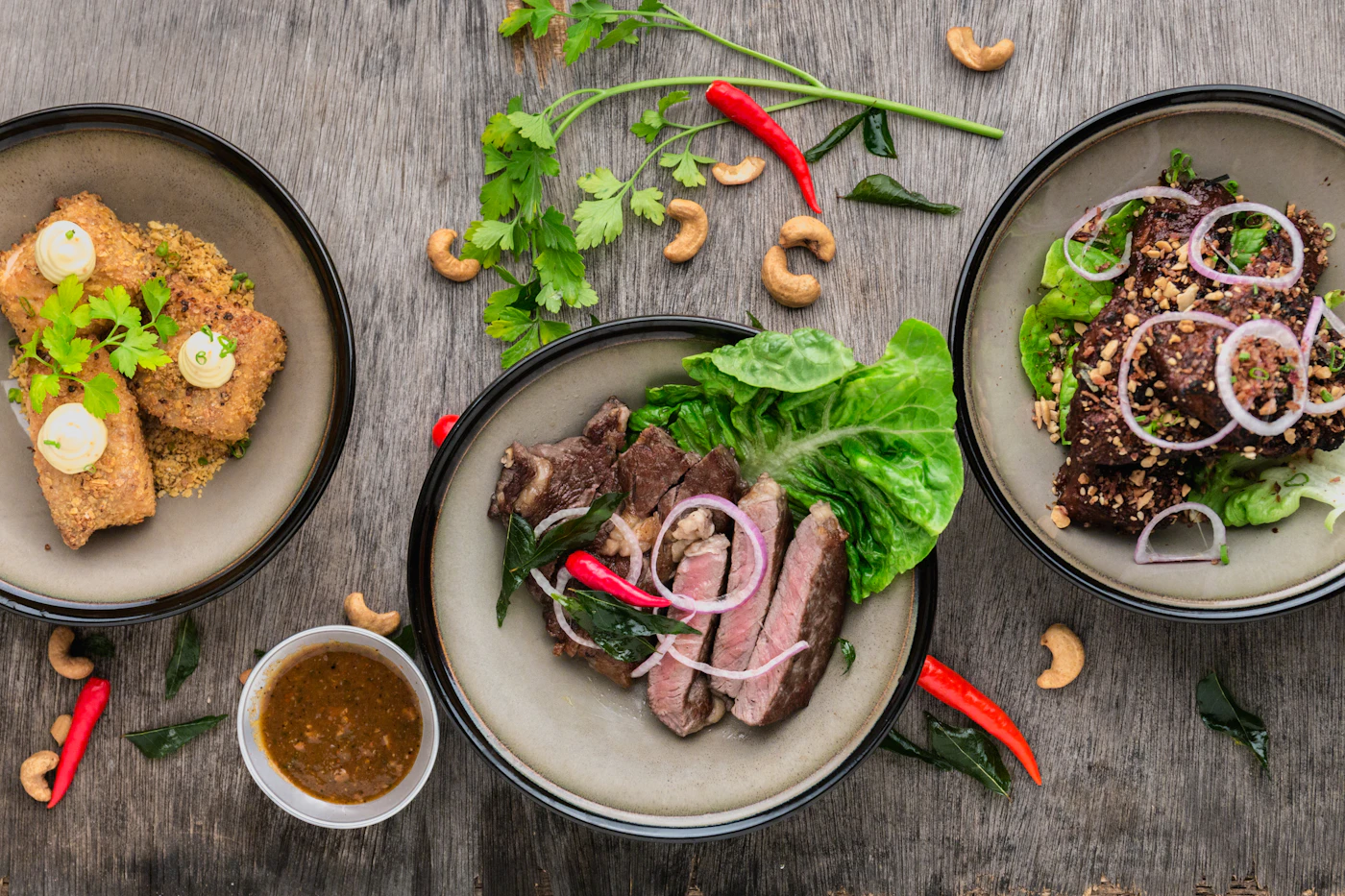
The food is the point. This is not drunk-food in the dismissive sense; it is grilled seafood, slow-braised pork, regional Filipino dishes executed with fine-dining precision and sold at a fraction of fine-dining prices because the model runs on volume and cheap nocturnal overhead. A chef can plate four hundred covers between midnight and four and make better margins than he ever did serving forty at eight.
I spent six years cooking for people who photographed their food and ate half of it. Now I cook for nurses who finished a twelve-hour shift and are genuinely, beautifully hungry. I have never been a better cook, said the Poblacion chef, scraping his grill between orders.
The clientele has changed the cooking in subtle ways. Late-night diners want food that is fast, hot, generous and restorative — the opposite of fussy. The chefs who have thrived are the ones who let the constraint sharpen them, paring their menus to a handful of dishes done extremely well rather than a sprawling carte. The discipline of the hour, several told me, has made them better.
The affordability undercurrent
There is a harder economic story beneath the romance, and the diners name it themselves. For many of Manila's young workers, a good meal at one in the morning is the only good meal they can afford to eat out at all. Daytime restaurants in the central business districts price for expense-account lunches and special occasions; the late-night scene prices for people paying with their own thin wages.
The same applies to the creative and freelance class — designers, editors, developers — who have drifted onto nocturnal schedules partly by temperament and partly because remote work for foreign clients runs on foreign hours. They are the late-night scene's other core customer, and like the call-centre agents they have made the after-dark table their default social space because it is where their friends, and their budgets, actually are.
This is why the boom feels less like a luxury trend than an adaptation. The city's most vital dining is happening at midnight because that is when its hardest-working and most stretched residents are awake and able to spend. The energy in the Poblacion queue is real, but so is the economic pressure that put those forty people in line at one in the morning rather than seven in the evening.
What the rest of Asia is watching
The scene has not gone unnoticed. Operators from Bangkok, Jakarta and Singapore have come to look, drawn by the same demographic shifts — outsourcing workforces, remote-work nocturnalism, priced-out young diners — that are emerging, less acutely, in their own cities. What Manila offers is a working model of what a genuine 24-hour food economy looks like when it is built by necessity rather than imposed by tourism.
Whether it can be exported is doubtful, and that is part of what makes it worth watching. Manila's after-dark scene is the product of a particular collision of economic conditions — a massive night-working population, a thinned fine-dining sector, a young generation priced out of the day — that no other Asian capital quite replicates. It is less a trend to be copied than a glimpse of how cities adapt when their economic clock refuses to keep ordinary hours.
By 3:40 the Poblacion queue has finally thinned, the nurses have gone home, and the chef is breaking down his station as the first delivery trucks rumble through the dark streets. He will sleep through the morning, wake in the afternoon, and do it again. Outside, the city that decided to eat after midnight is, for a few quiet hours before dawn, almost still — and then the call centres let out, and Manila gets hungry all over again.